
menu
Departments
.svg)
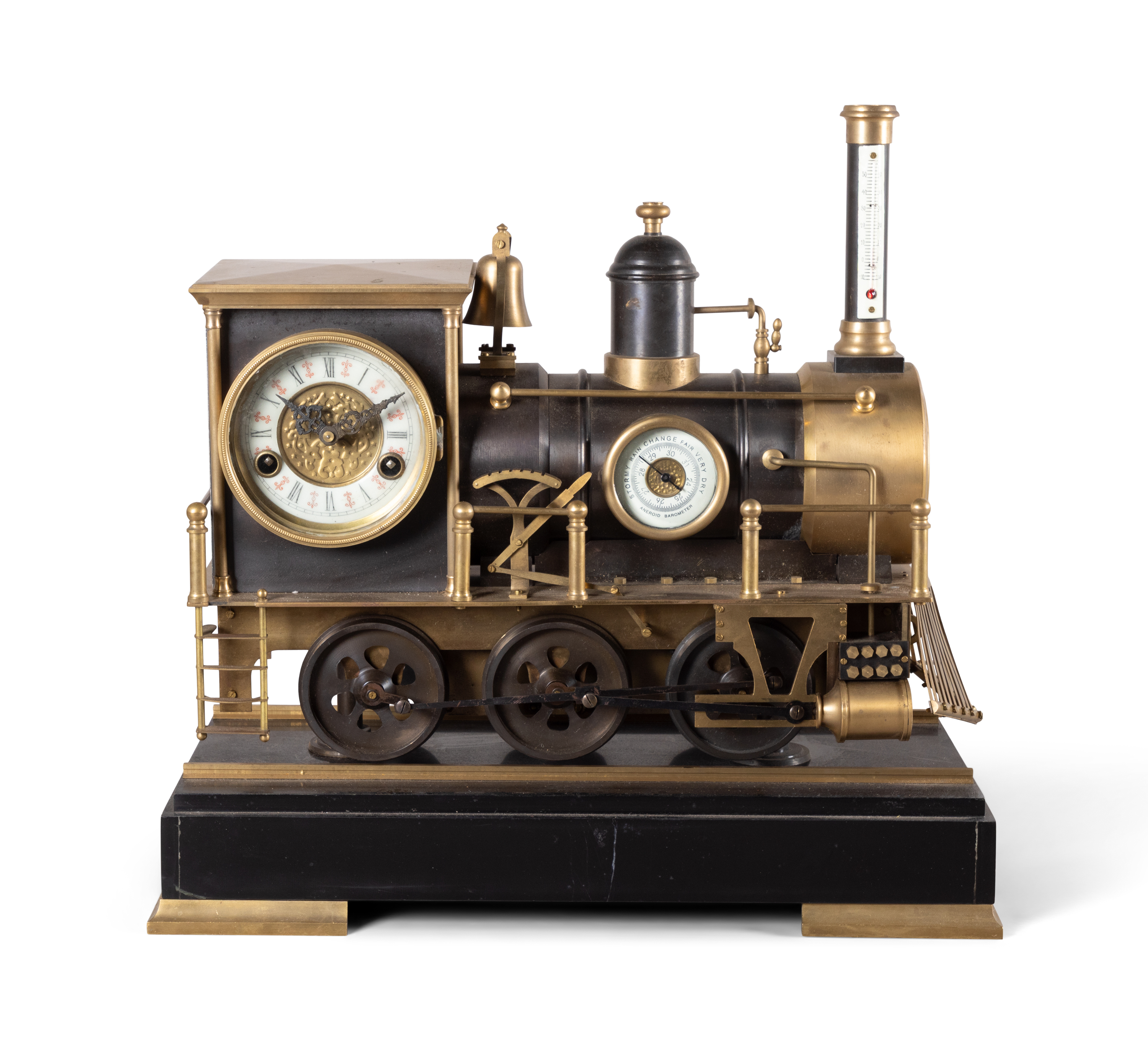

Most clocks are designed to quietly tell the time - tick, strike, repeat. But every so often, clockmakers produced pieces that demanded attention. Part engineering, part theatre, and often highly decorative, these clocks reflect moments when technology, design and taste collided. The following examples show just how expressive horology could become from the late nineteenth century onward.
Few objects capture nineteenth-century optimism quite like a steam locomotive. André Romain Guilmet (1827–1896), born in La Ferté-Gaucher, France, built his reputation on inventive horological designs, particularly mystery clocks and elaborate novelty pieces. He patented several mechanical ideas and became known for clocks celebrating modern industry, windmills, steam engines, lighthouses and locomotives among them.
This bronze locomotive automaton clock, after Guilmet’s original model, follows that tradition. The dial is integrated into the body of the train alongside instruments such as a barometer and thermometer, a reminder of the era’s fascination with scientific measurement. A separate automaton mechanism animates the wheels, independent of the time train, turning the piece into a kinetic display as much as a clock. Guilmet’s industrial series, produced largely in the late nineteenth century, coincided with the height of European railway expansion and the widespread fascination with mechanical progress.
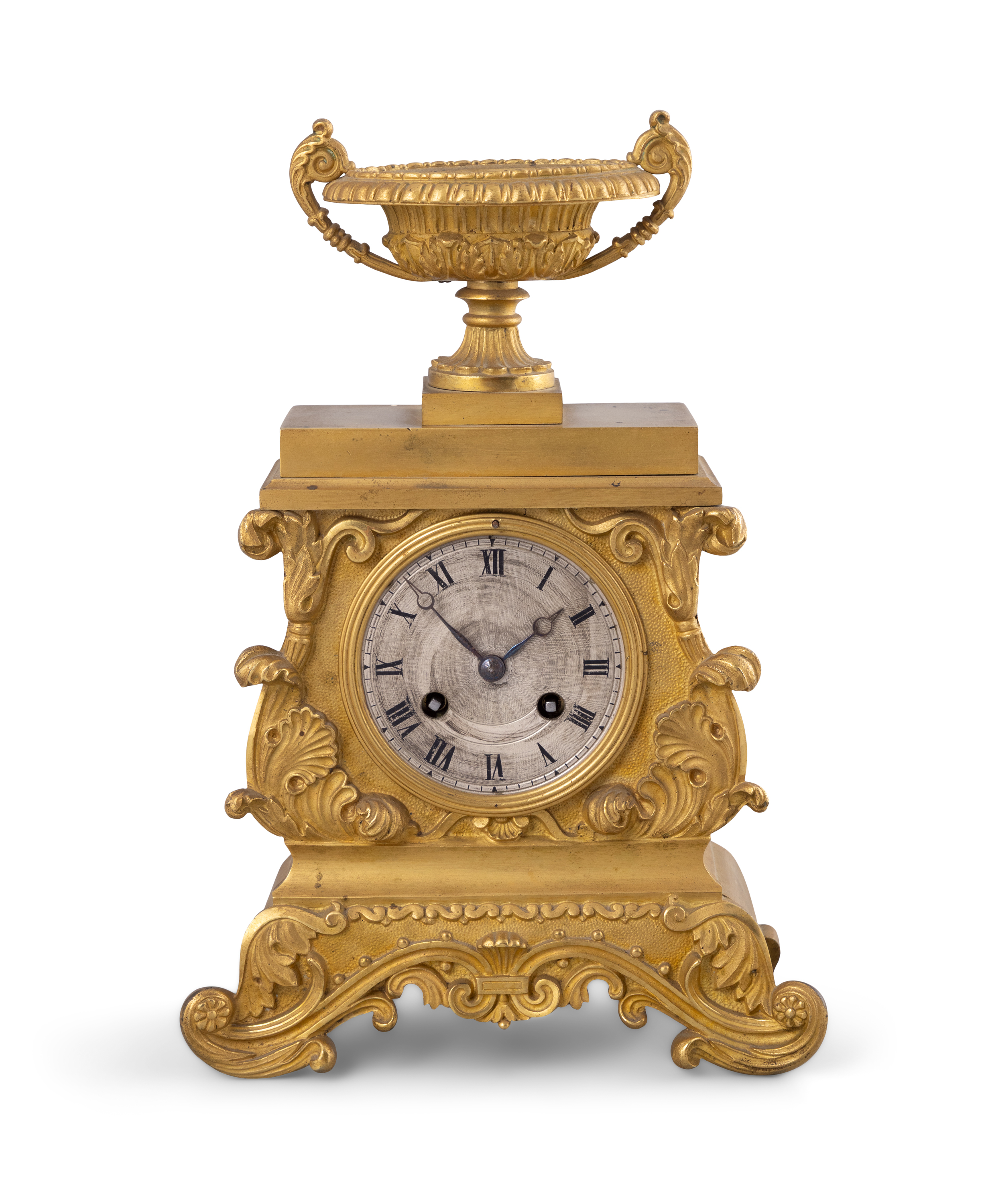
The Paris bronze mantel clock by Guyerdet and Romilly belongs to the rich decorative clockmaking tradition of nineteenth-century France. Clocks signed Guyerdet, Paris generally date from the early to mid-nineteenth century and reflect the collaborative nature of the Paris clock trade, where retailers or assemblers frequently sourced movements from specialist makers. The firm’s name appears on a range of decorative French clocks and watches of the period, with examples preserved in museum collections, including the Victoria and Albert Museum, underscoring its place within the broader tradition of Parisian luxury horology.
The additional signature of Romilly on the mechanism references the prestigious earlier watchmaking name associated with Jean Romilly (1714–1796), the Genevan-born Paris horologist known for his technical writings and Enlightenment-era reputation. The acanthus scroll gilt-bronze case with urn finial reflects the classical revival taste typical of French mantel clocks produced between 1830 and 1880, when ornamental gilt-bronze clocks formed an essential element of fashionable French interior.
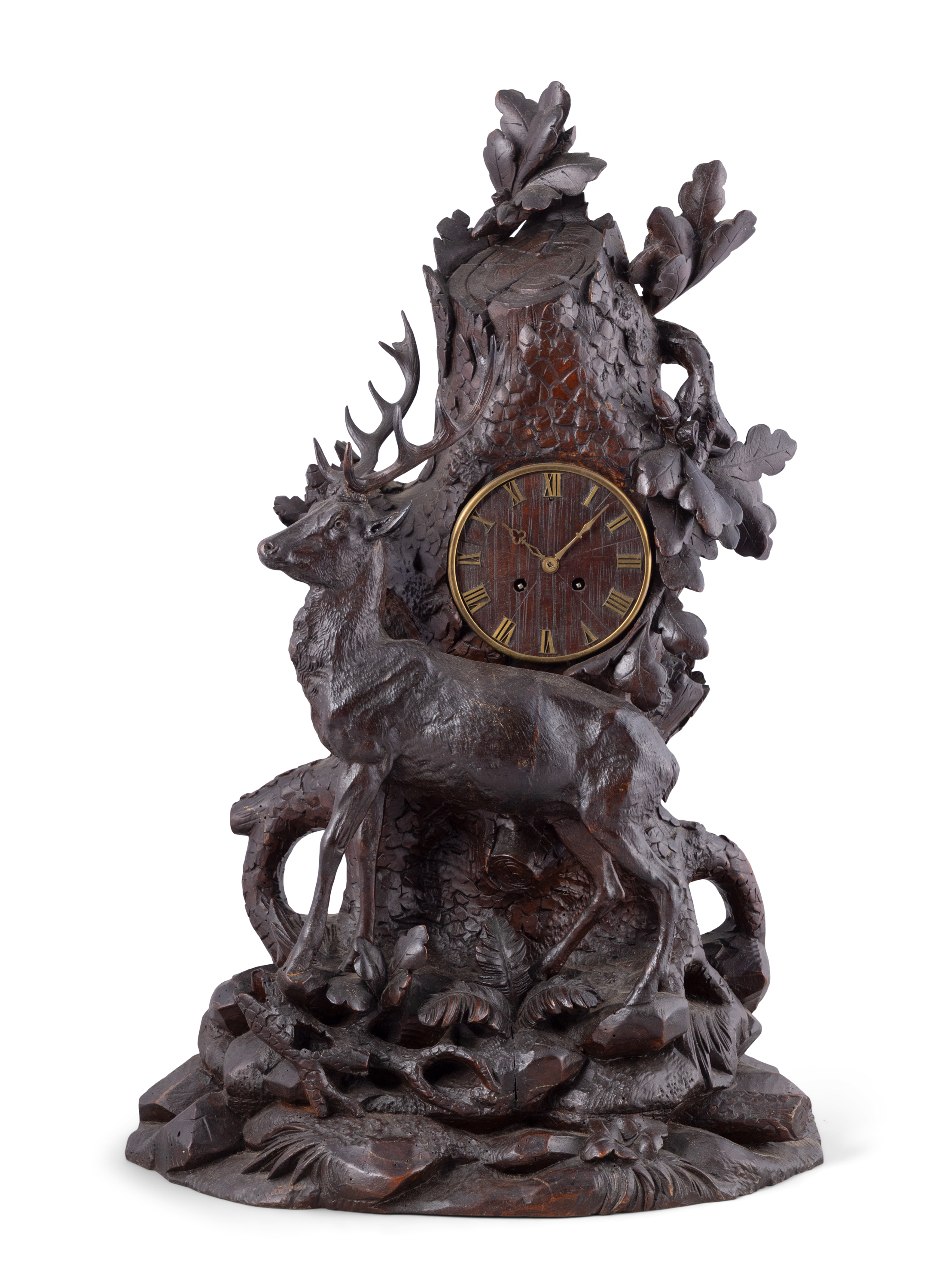
The Black Forest region of southern Germany became a major clockmaking centre during the nineteenth century, exporting widely to Britain and America. Among its best-known makers were Emilian Wehrle (1832–1896) of Furtwangen, whose firm specialised in musical, automaton and novelty clocks. Wehrle’s workshop combined traditional wood carving with increasingly sophisticated mechanical movements, often incorporating bellows driven musical mechanisms and animated figures.
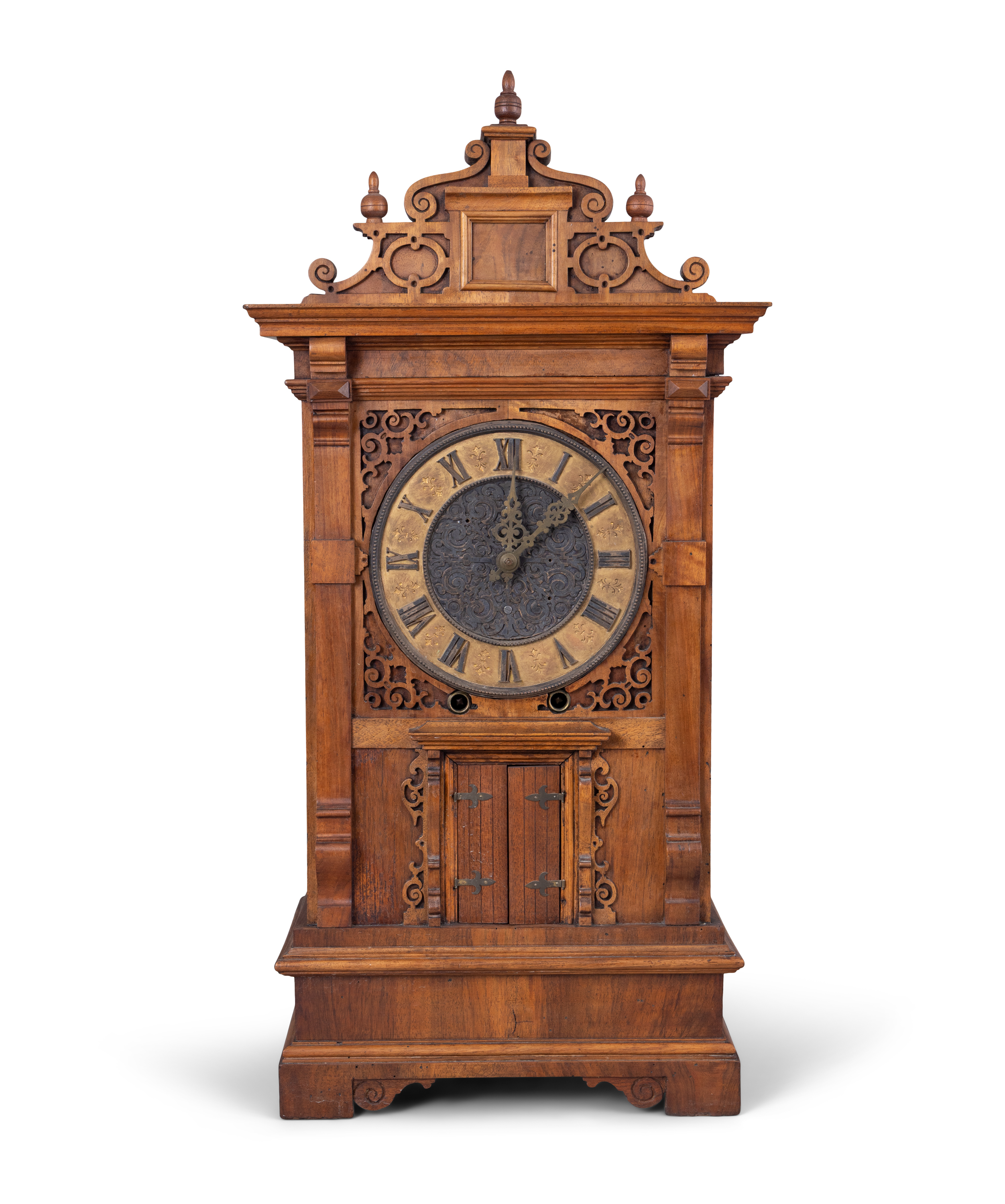
This Victorian walnut cased trumpeter clock, possibly by Wehrle, fits squarely within this tradition. Automaton trumpeter clocks typically animate on the hour through a separate musical train, with figures moving while sound is produced. In this example, the Highland trumpeters, with their raised instruments, signal the moment just a fanfare sounds. These trumpeter clocks and carved stag clocks (lot 389) were especially popular in England and America between 1870 and 1900, when Black Forest makers capitalised on the Victorian appetite for decorative novelty and mechanical ingenuity.
The Triple Fusee Mantel Clock
The defining feature of this late nineteenth century mantel clock is its triple fusee movement. The fusee mechanism dates back to early spring driven clocks, but English makers such as Thomas Tompion (1639–1713) and George Graham (1673–1751) helped standardise the high quality fusee movements.
Each fusee, a cone shaped pulley connected to the mainspring by a chain, regulates power as the spring unwinds, improving consistency in both timekeeping and chiming. Separate trains drive the time, the chiming sequence and the hour strike. The chimes sound on tuned rods or gongs, producing a clear, sustained tone, followed by a deeper hour strike, creating the rich layered sound in Victorian interiors.



.jpg)


.png)
.png)
.jpg)


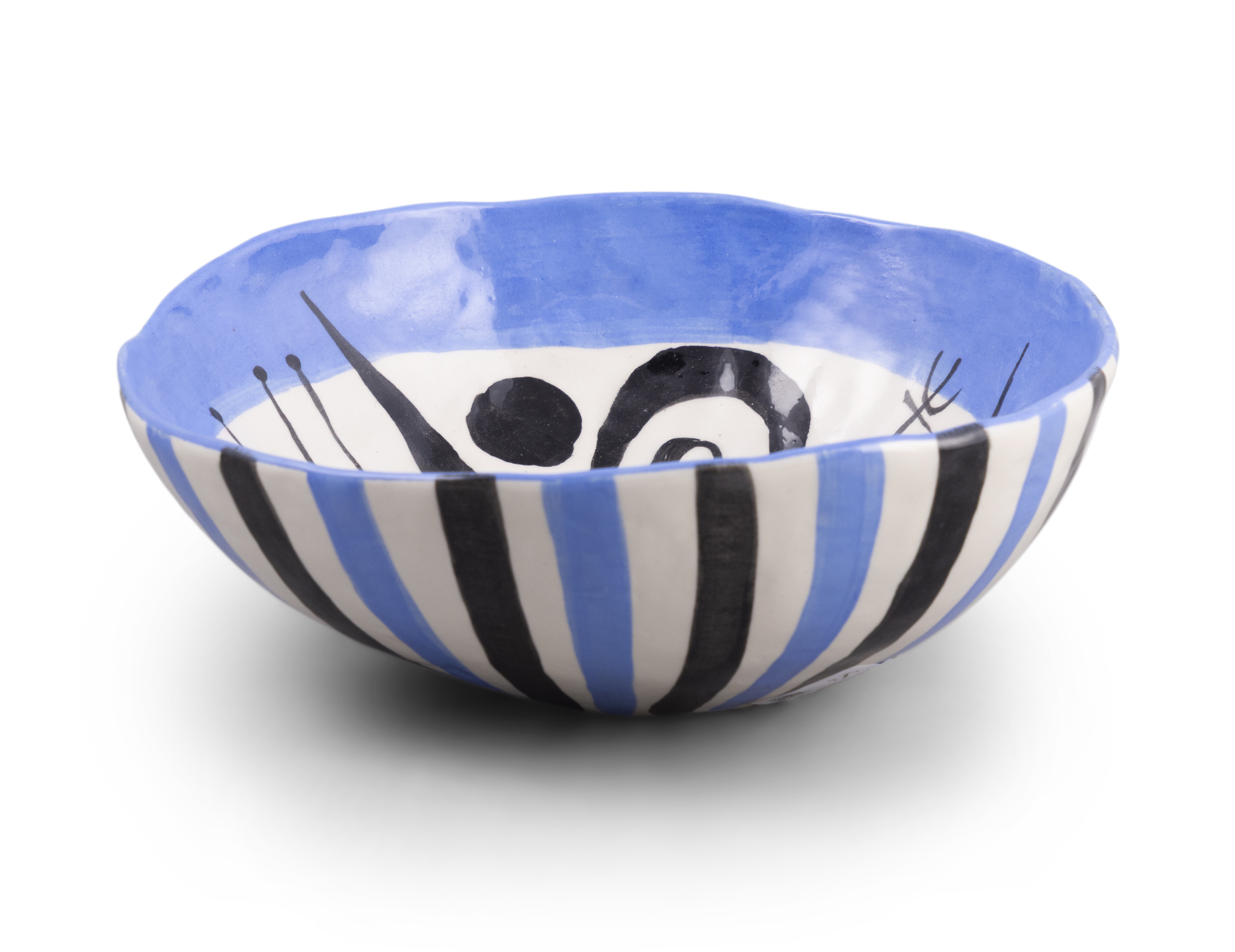
John ffrench was an instrumental figure in the design industry in Ireland and a distinguished pioneer of Irish studio pottery.


)%20(1).jpg)

%20(002).png)


%20(2).jpg)




%20(1200%20x%20768%20px)%20(2).png)
.png)

.png)



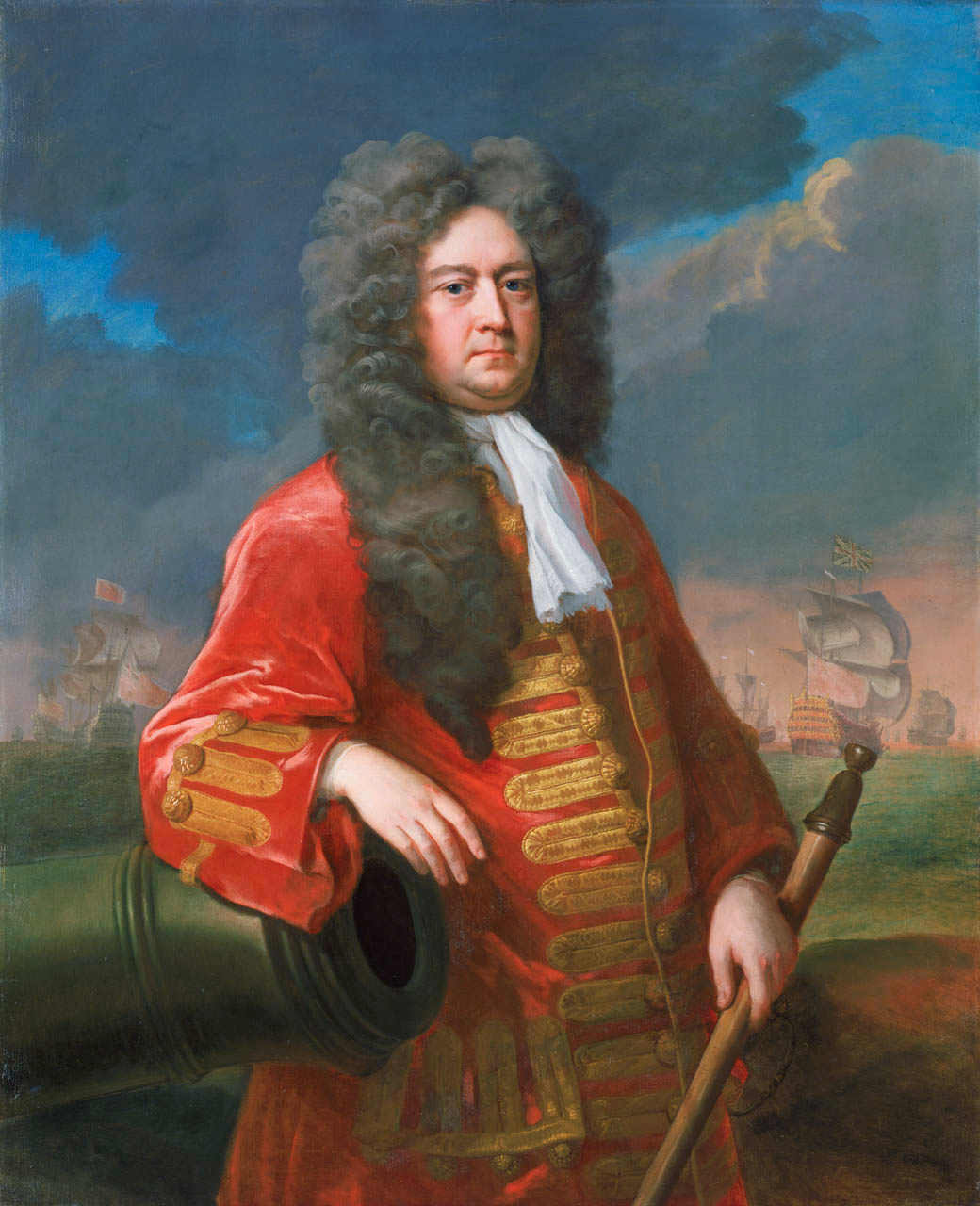
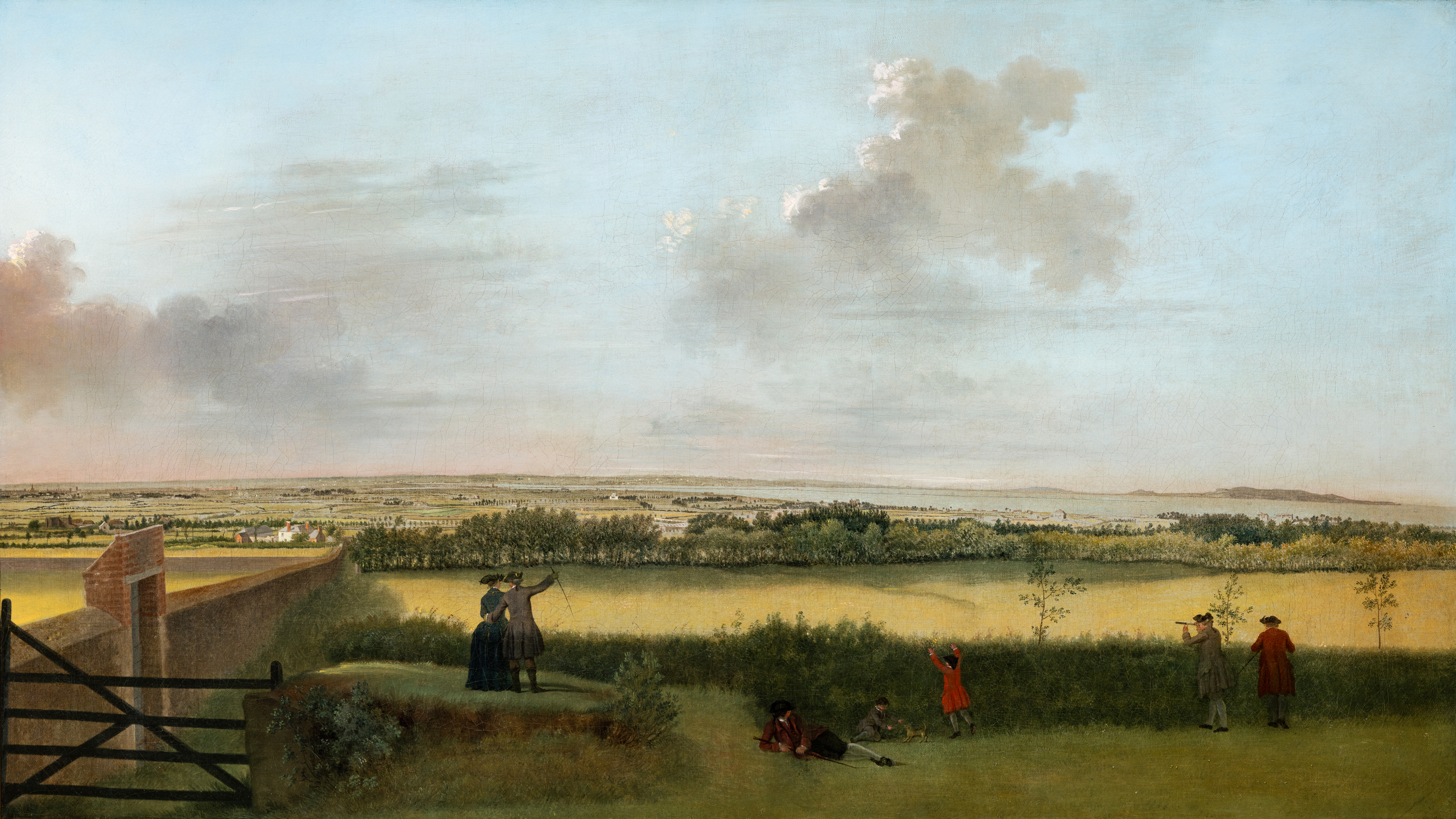
"I should declare my hand. I have a weakness for pictures that punch above their physical weight, and for artists who have been quietly underrated for too long. This pair is both. They are intimate enough to live with at close quarters and serious enough to repay any amount of looking. If the market has lately shown signs of catching up with eighteenth-century Irish painting and I think it has, these two small panels feel, to me, like exactly the sort of thing that will look obvious in twenty years’ time."





Adam’s is honoured to present works from the collection of Lord Rossmore in the upcoming Country House Collections auction at Howth Castle on 28th April. It is seldom that an influential Irish family collection that has survived through the generations comes to the open market.




Works Sold at Adam’s Now in the Irish National Collection

A great opportunity to purchase both established and lesser-known artist’s work at an accessible price point, the Online Picture Auction is the first of many sales to be hosted at Adam’s in 2026. It is perfect for those looking to start a collection and the discerning collector alike.



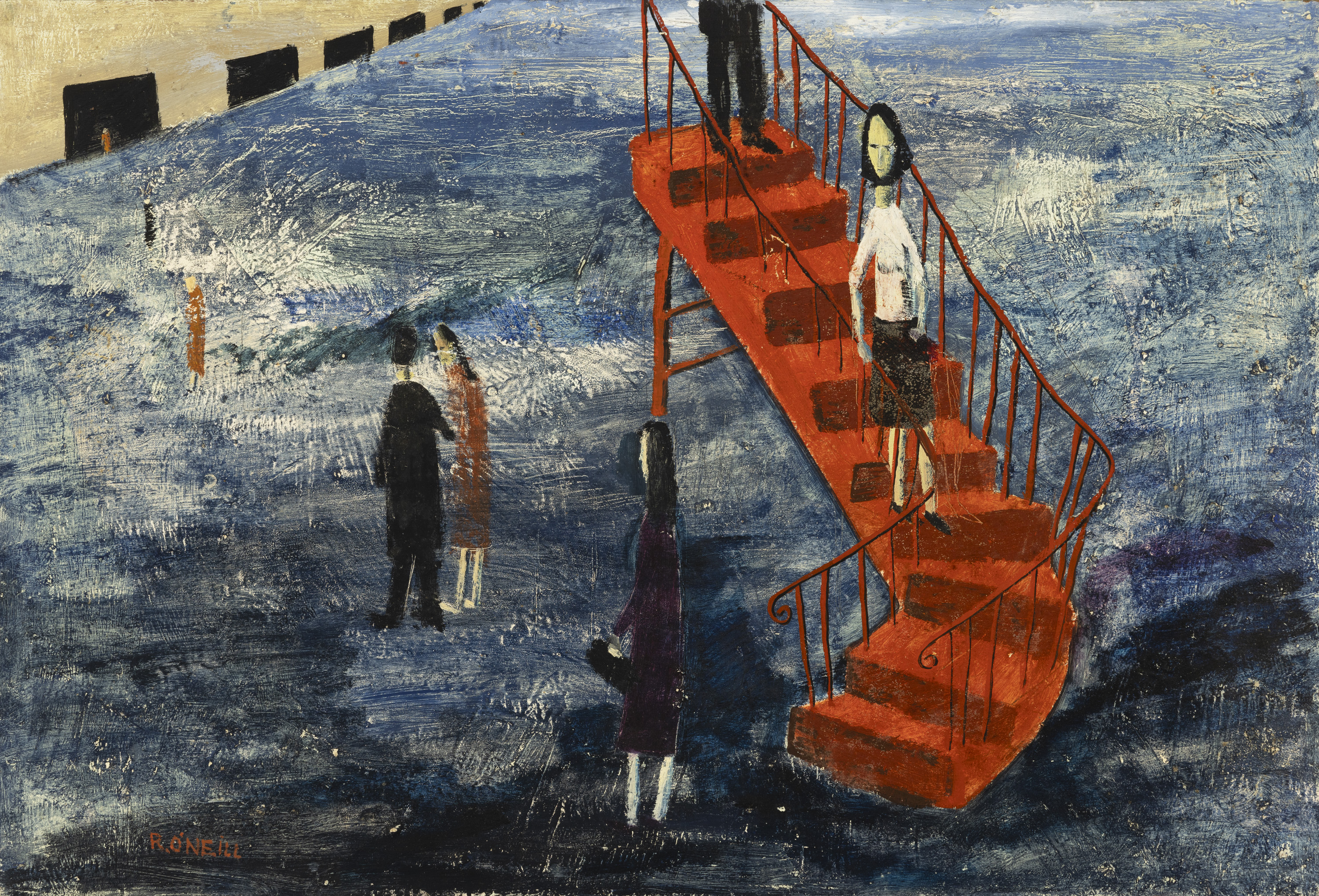
Through this article, let our expert Adam Pearson guiding you to the (re)discovery of the once established Irish painter Richard O’Neill.


Buying at Auction and the Role of Antiques in a Modern Home


Important Irish Art Auction Highlights

Oliver Dowling Collection by Aidan Dunne


2024 is a year in which Adam’s wants to recognise the key role buying antique furniture and furnishings at auction contributes greatly to the sustainable initiative. In 2019 the Environmental Protection Agency reported stark figures that each year in Ireland 1.2 million reusable bulky items, primarily furniture goes into landfill. Similar to the problem of ‘fast fashion’, the constant production and consumption of new items is leading to rapidly growing waste problem. We want to acknowledge those who are already buying second hand or antique furniture at auction and to encourage new buyers by highlighting the benefits of acquiring affordable, well-made quality items that are built to last.


James Adam & Sons Ltd, Fine Art Auctioneers and Valuers, 26 St. Stephen’s Green, Dublin 2,
D02 X665, Ireland


