
menu
Departments
.svg)


In the Bingwu Year of the Fire Horse, we are honoured to introduce the unique cultural significance and historical legacy of horse culture in China. The horse is both a spiritual symbol and a material force deeply embedded in Chinese civilization. It shaped ancient warfare, transportation, and ritual systems, while also inspiring artistic creation, national identity, and cultural continuity. From the ritual traditions of the pre-Qin era to the flourishing craftsmanship of the Ming and Qing dynasties, the image of the horse has remained ever-present throughout Chinese history. Icons such as “Galloping Horse Treading on a Flying Swallow” and the auspicious motif “Immediate Promotion upon Horseback” have become uniquely Chinese expressions of horse culture. In comparison to other animal depictions, equestrian imagery is the most important form of representation in Chinese art, making examples highly sought after on the international market.
1. Pre-Qin to Qin Dynasty (c.21st century BCE – 207 BCE) | Ancient Greece and Early Rome
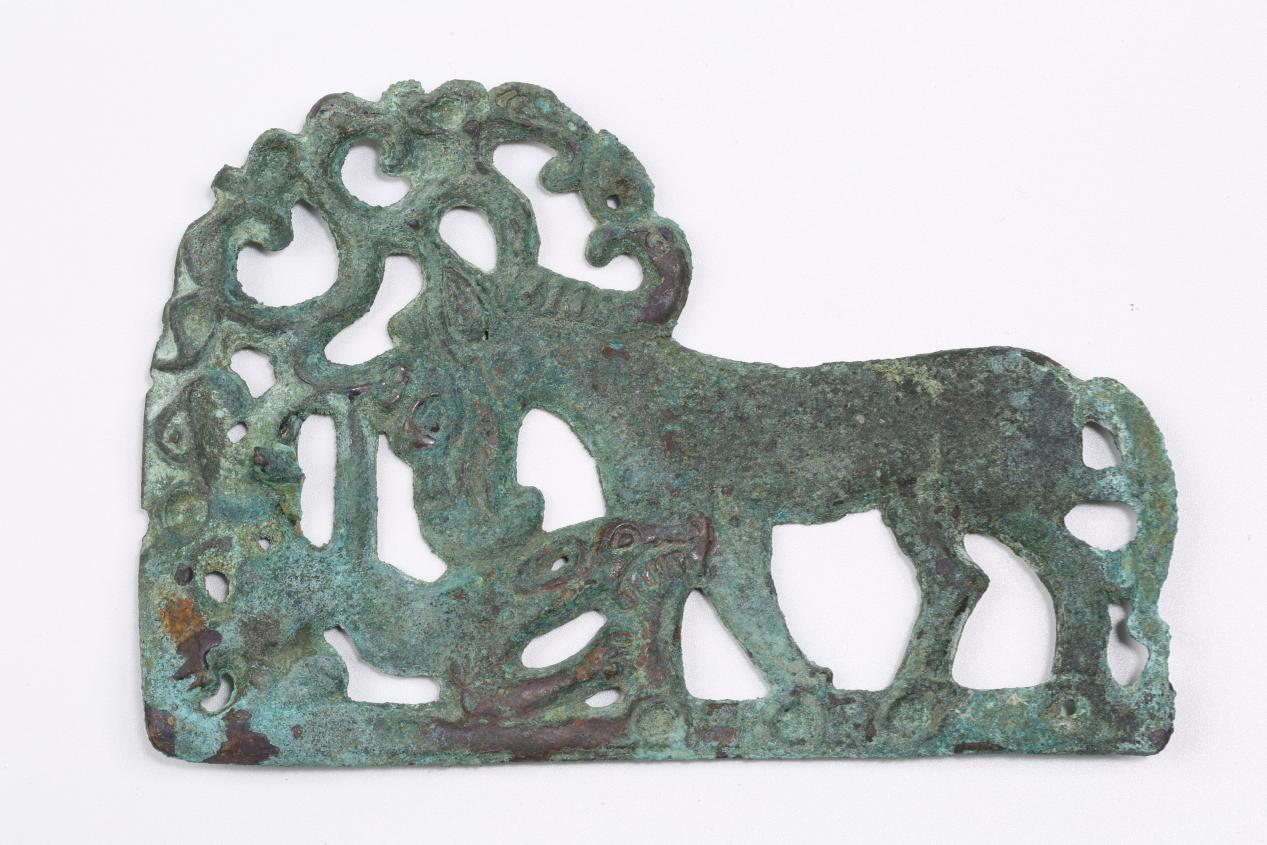
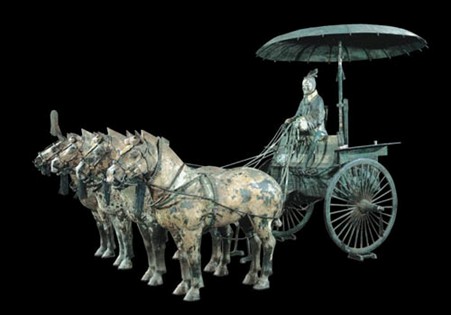
The Pre-Qin and Qin periods marked the transition of Chinese civilization from competing states to imperial unification. Horses were central to ritual, warfare, and aristocratic identity. Early native Chinese horses were symbols of order and power, while later contact with northern nomadic peoples introduced stronger and more resilient breeds that transformed military strategy from chariot warfare to cavalry combat. The Qin Empire further integrated horse administration into state power, and the terracotta horses and bronze chariots from the Mausoleum of the First Emperor remain among the greatest achievements of early Chinese realism and craftsmanship.
The Qin dynasty established the first unified empire in Chinese history, and the horse became an essential instrument for consolidating centralized imperial power. Building upon native Central Plains horse breeds while incorporating the strength and endurance of northern Xiongnu horses, Qin horses became increasingly suited for both military campaigns and imperial ceremonial use. A highly organized state horse administration supported the Qin cavalry in conquering the Six States, while the construction of a nationwide transportation network further elevated the horse as a vital link connecting the empire and symbolizing the authority of a unified realm.
Among the most culturally and artistically significant achievements of this period are the bronze chariots and terracotta horses discovered in the Mausoleum of the First Emperor of Qin. The bronze chariots demonstrate extraordinary technical sophistication and precision in casting, while the terracotta horses are powerfully modelled with strong physiques and natural musculature. Without excessive ornamentation, these sculptures achieve remarkable realism, vividly capturing the spirit and vitality of Qin horses. They embody both the imperial ambitions of Qin ShiHuang and the exceptional craftsmanship of Qin artisans, standing today as “living fossils” of the historical and cultural world of the Qin empire. Through these masterpieces, the horse culture that had evolved since the pre-Qin era reached a new height within the context of a unified imperial civilization.
2. Han Dynasty (202 BCE – 220CE) | Late Roman Republic to High Roman Empire
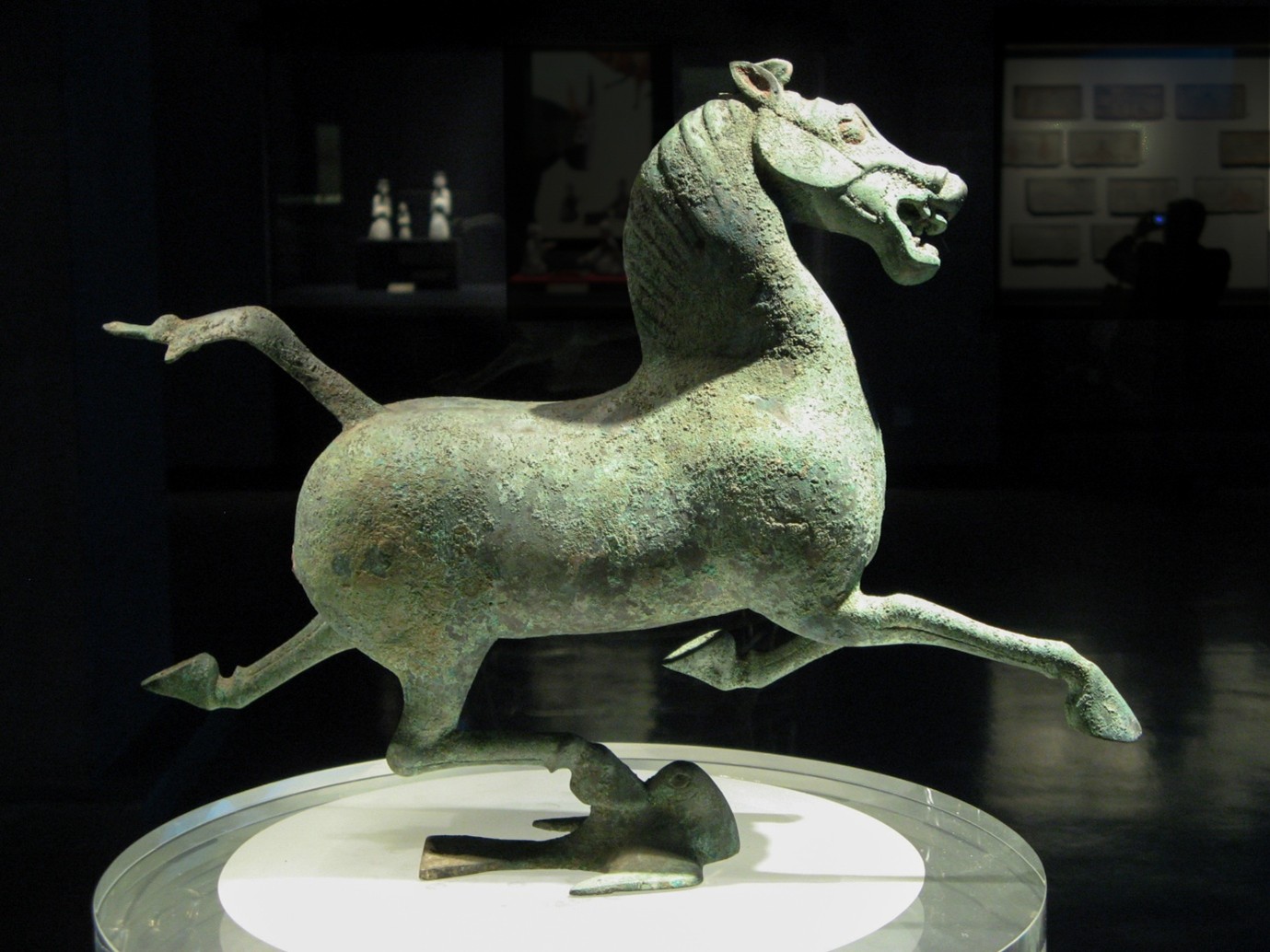
During the Han dynasty, horses symbolized imperial ambition and expansion. The opening of the Silk Roadbrought Ferghana horses and other Central Asian breeds into China, greatly improving cavalry strength and mobility. Military campaigns led by generalssuch as Wei Qing and Huo Qubing established the horse as a symbol of heroism and talent. Han artistic depictions of horses combined realism with spiritual imagination, most famously represented by the celebrated bronze sculpture known as the “Galloping Horse”.
3. Tang Dynasty (618–907 CE)| Early Medieval Europe (Rise of the Franks and Prosperity of Byzantium)
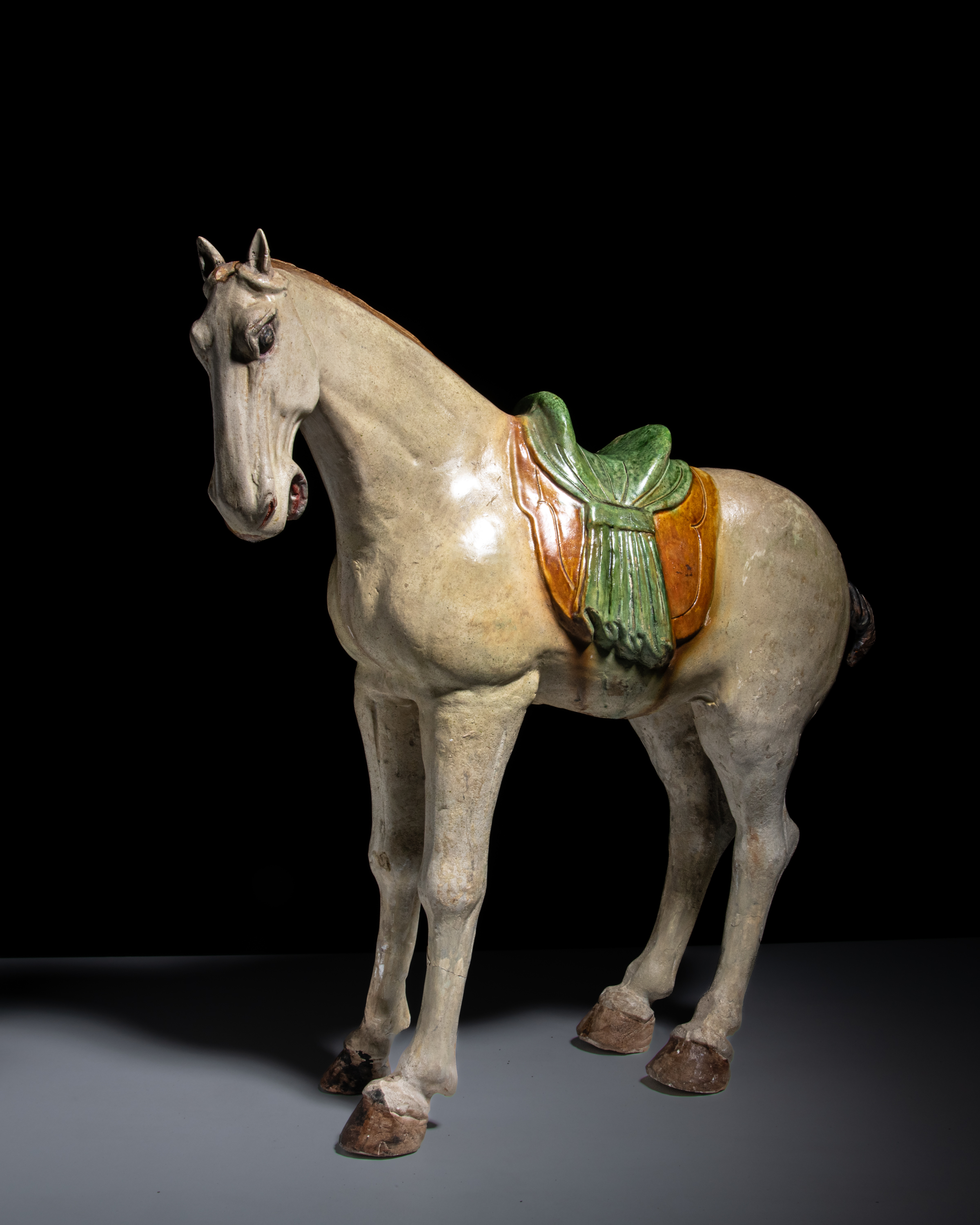
The grandeur and cosmopolitan spirit of the Tang dynasty were vividly embodied through its horses. Imported Central Asian steeds, including Ferghana horses, enriched the imperial stables, which at their height reportedly numbered hundreds of thousands. Horses were not only military assets but also essential elements of aristocratic leisure, including polo and horse racing. Tang sancai glazed pottery horses became masterpieces of world ceramic art, combining flowing amber, green, and cream glazes with powerful sculptural realism. Paintings of horses from the Tang era conveyed elegance, vitality, and freedom, reflecting the openness and confidence of Tang culture. The Tang dynasty represents one of the highest points of horse culture in Chinese history.
4. Song Dynasty (960–1279 CE)| High Medieval Europe
In the Song dynasty, the role of the horse gradually shifted away from warfare toward scholarly appreciation and artistic expression. Literati painters such as Li Gonglin portrayed horses with refined brushwork and restrained elegance, reflecting the intellectual and inward-looking spirit of Song culture.
5. Yuan Dynasty (1271–1368CE) | Late Medieval Europe and the Mongol Expansion
The rise of the Mongols restored the horse to the center of political and military life. Hardy steppe horses supported the vast expansion of the Mongol Empire and facilitated unprecedented exchanges across Eurasia. Artistic depictions from the Yuan period combined the bold vitality of nomadic culture with refined Chinese painting traditions.
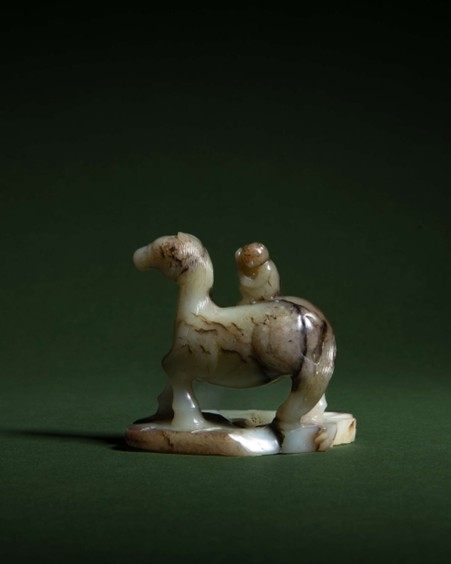
6. Ming Dynasty (1368–1644CE) | European Renaissance and Age of Exploration
During the Ming dynasty, horses increasingly became associated with ritual, ceremony, and decorative arts rather than large-scale military expansion. Jade carvings of horses, often made from white Hetian jade, reflected literati ideals of elegance, restraint, and auspicious symbolism.
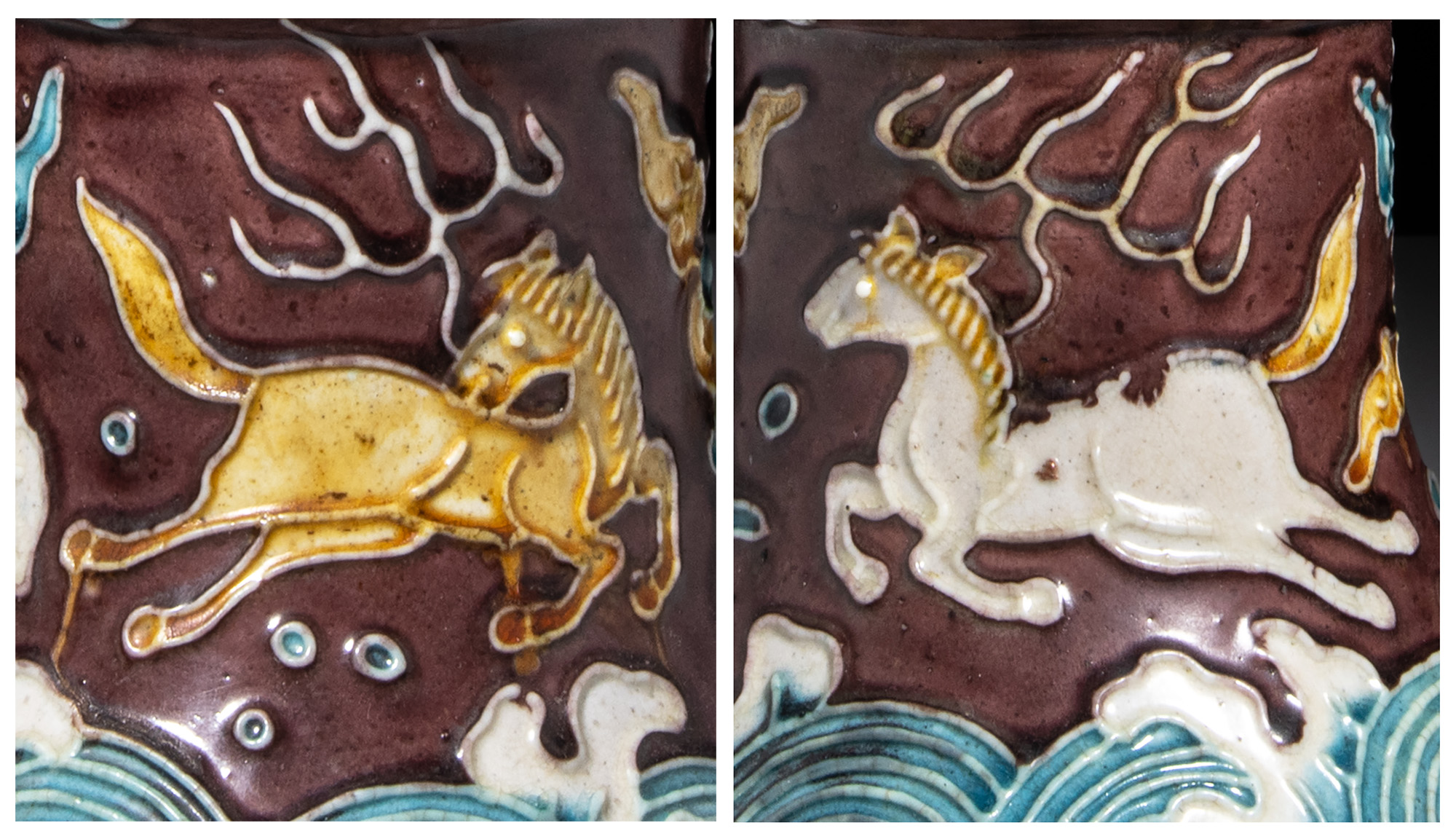
7. Qing Dynasty (1644–1912CE) | Early Modern Europe and the Industrial Revolution
The Qing dynasty preserved the Manchu martial tradition of horseback riding and archery, making the horse a continued symbol of imperial authority, hunting culture, and aristocratic identity. While horses gradually lost their practical military importance in the modern era, they gained increasing value as luxury artistic subjects. Qing jade horse carvings reached extraordinary technical sophistication, combining openwork carving, relief carving, and gemstone embellishment. These works symbolized prosperity, nobility, and the auspicious wish for rapid success and promotion. Realistic horse paintings and gilt bronze equestrian sculptures further reflected the refined court aesthetics and multicultural identity of the Qing empire. The Qing period represents the culmination of horse-themed craftsmanship in imperial China.
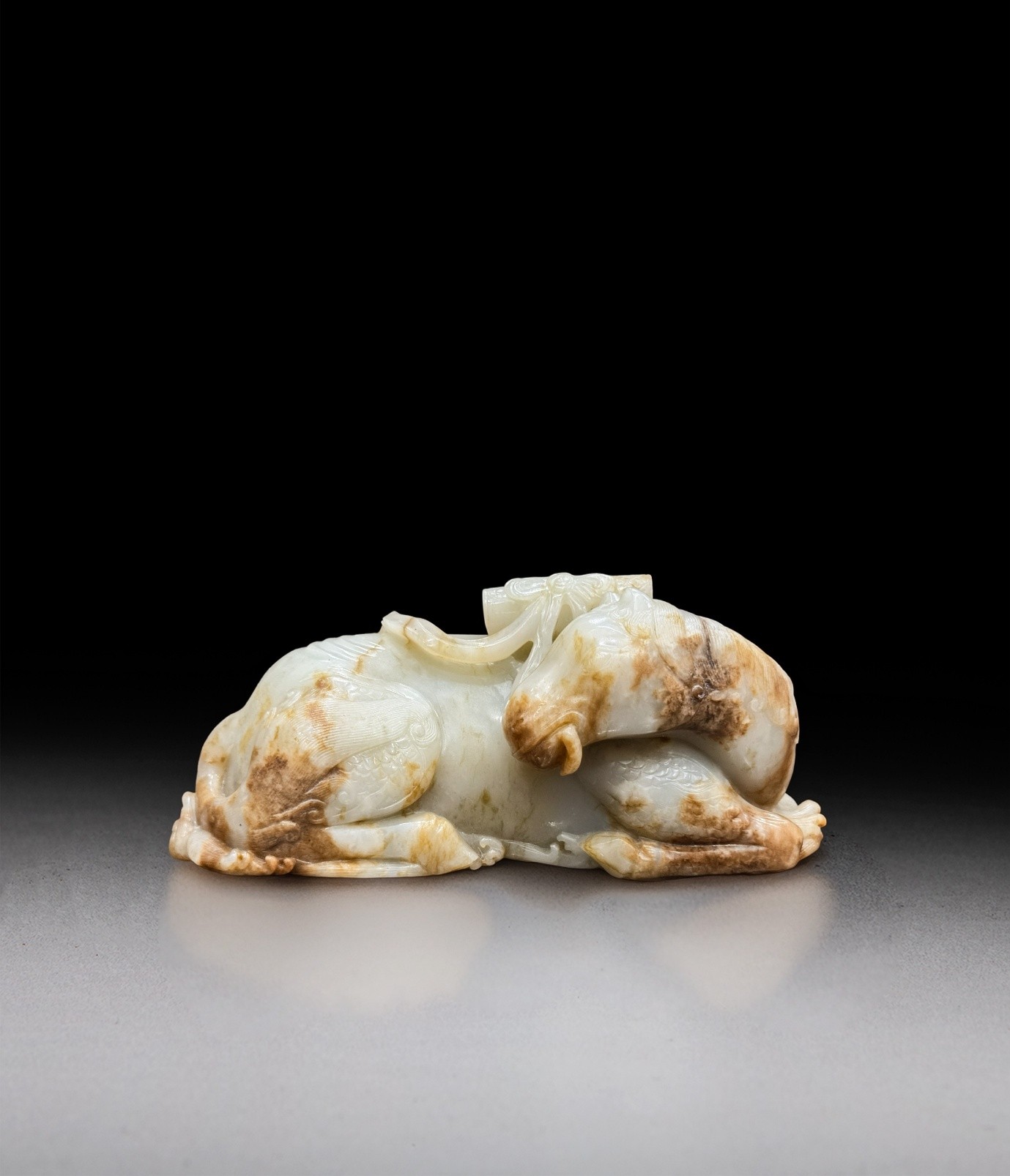
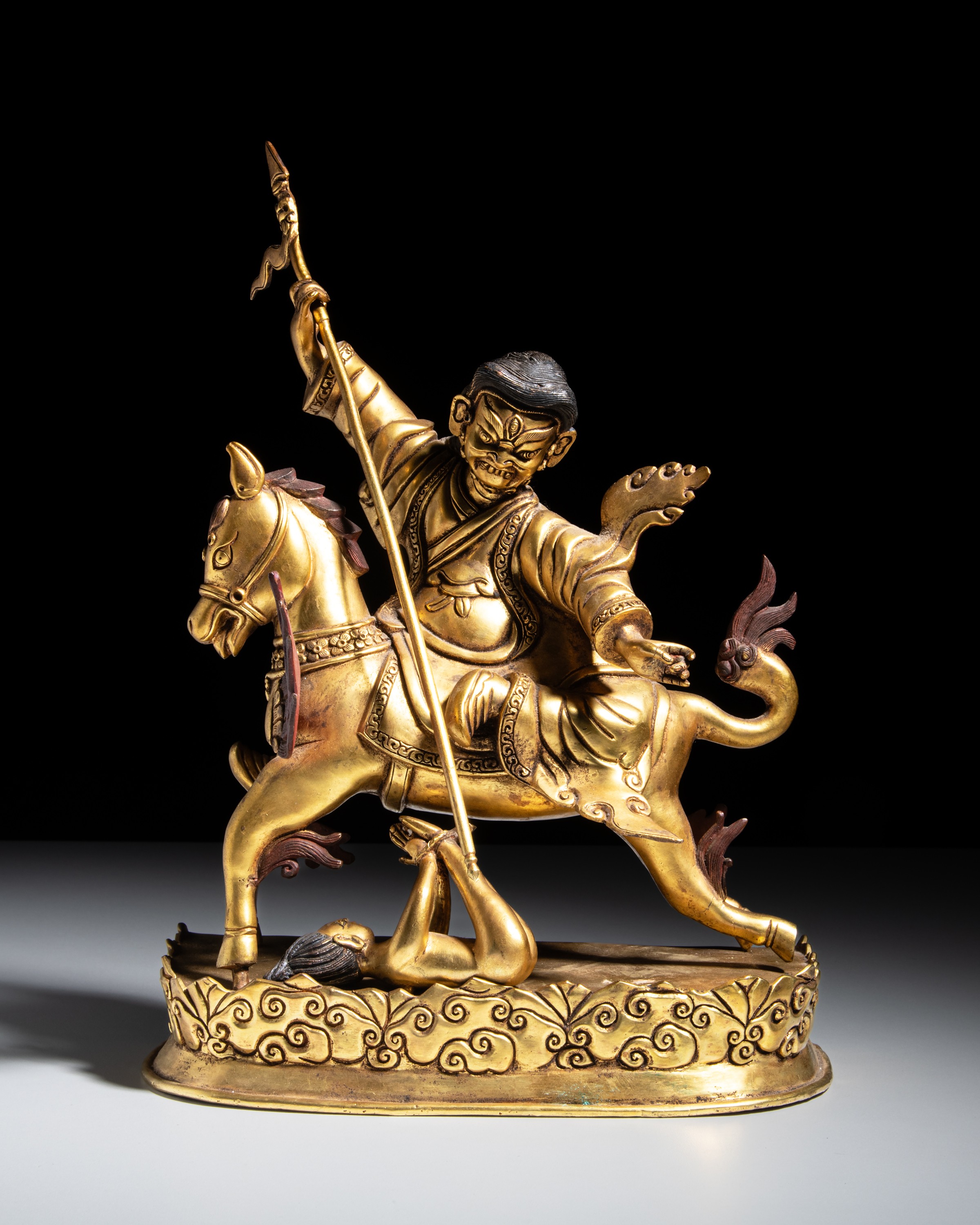
From the establishment of a unified empire in the pre-Qin period to the flourishing of craftsmanship in the Ming and Qing dynasties, the image of the horse has remained closely intertwined with Chinese cultural and historical development. It witnessed the grandeur of the Han and Tang dynasties, the restraint of the Song and Yuan periods, and the elegance of the Ming and Qing eras. From a symbol of ritual and status to an artistic medium, and from a partner in warfare to an object of aesthetic appreciation, the changing roles of the horse reflect the evolution of Chinese civilization over millennia.
Those horses engraved on painted pottery, cast in bronze, carved in jade, and depicted in paintings and calligraphy not only embody the creativity of artisans but also carry the spiritual aspirations of the Chinese people. They have become a cultural symbol that transcends time — enduring for thousands of years while remaining ever fresh and meaningful.


.png)
.png)
.jpg)

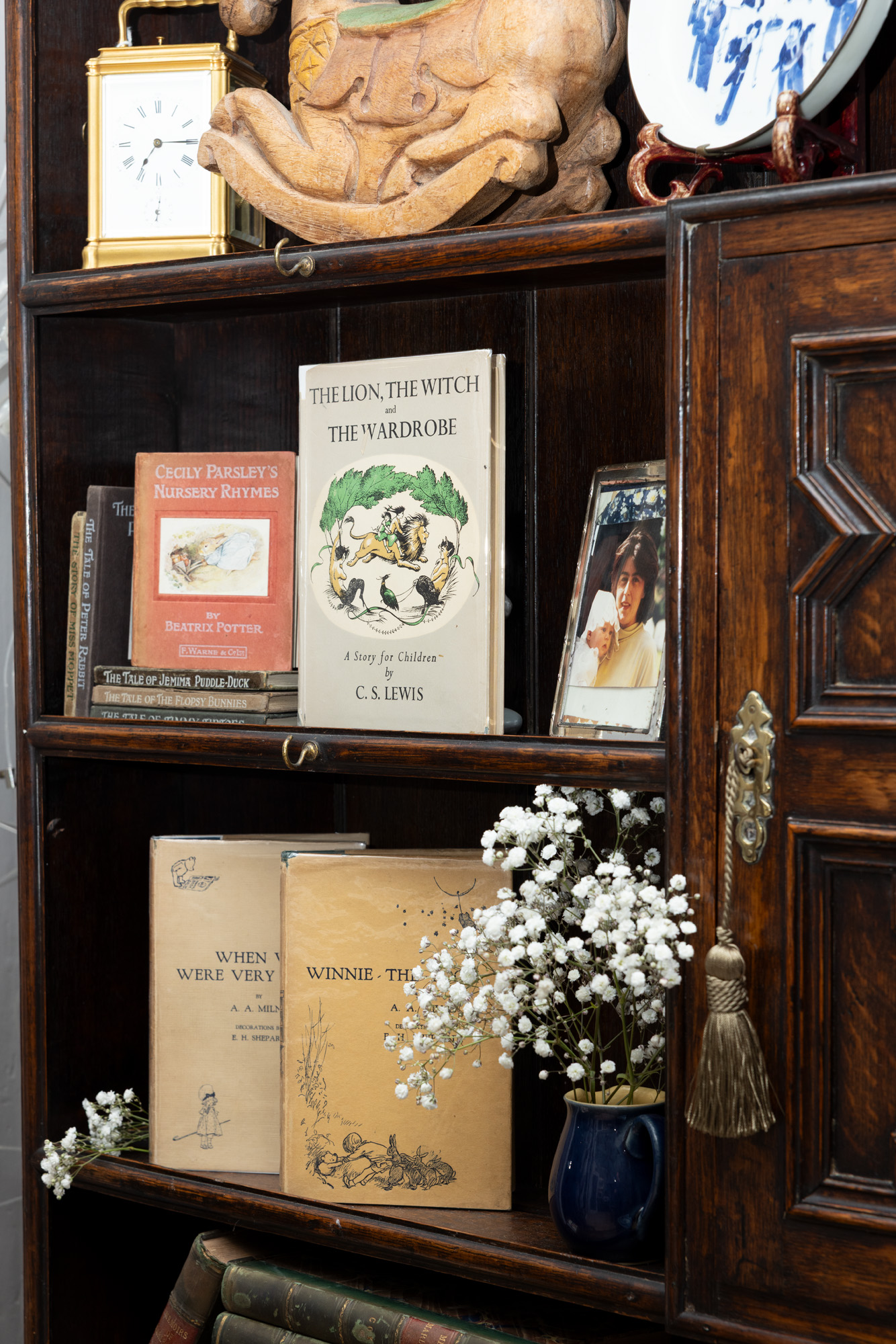
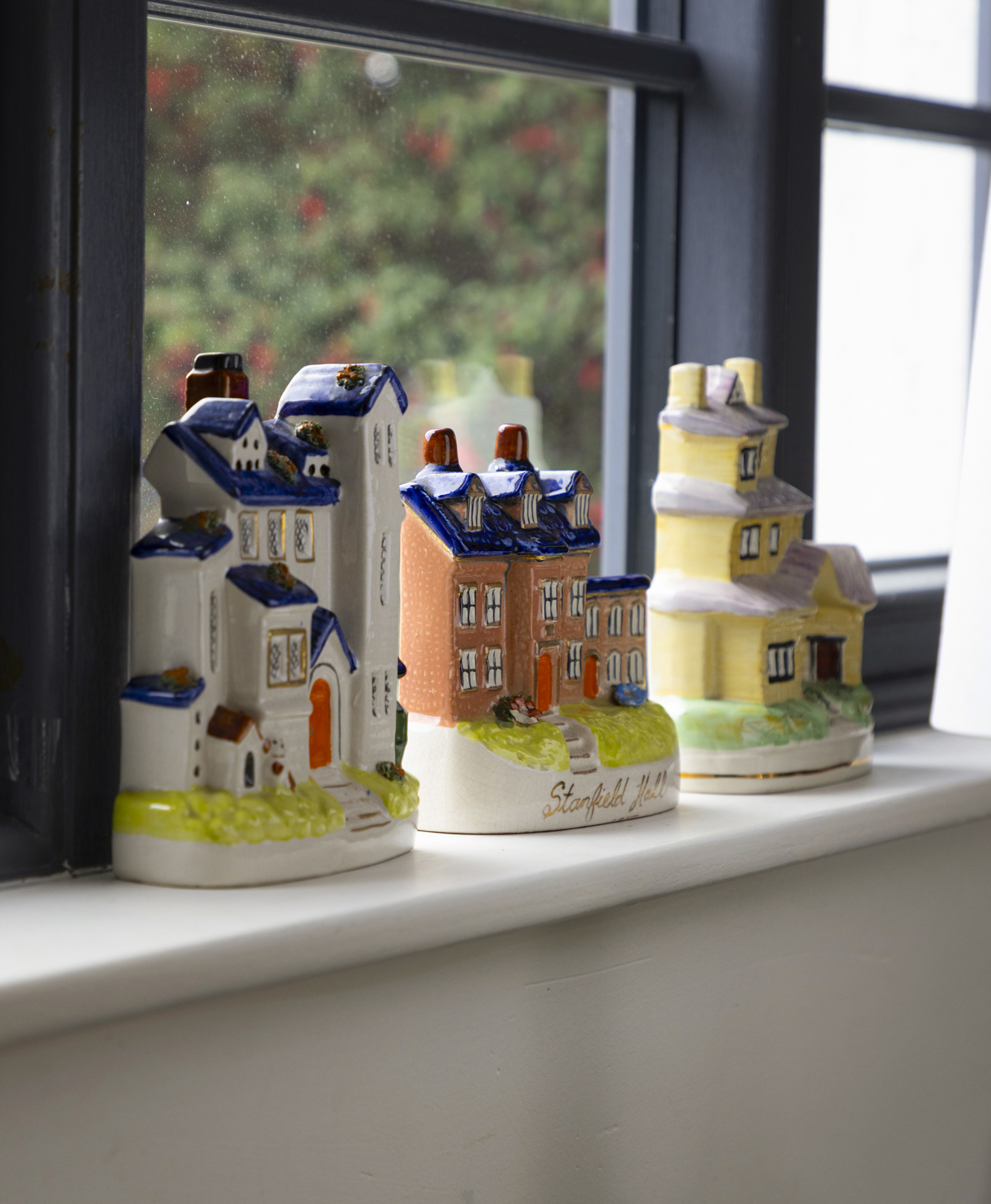
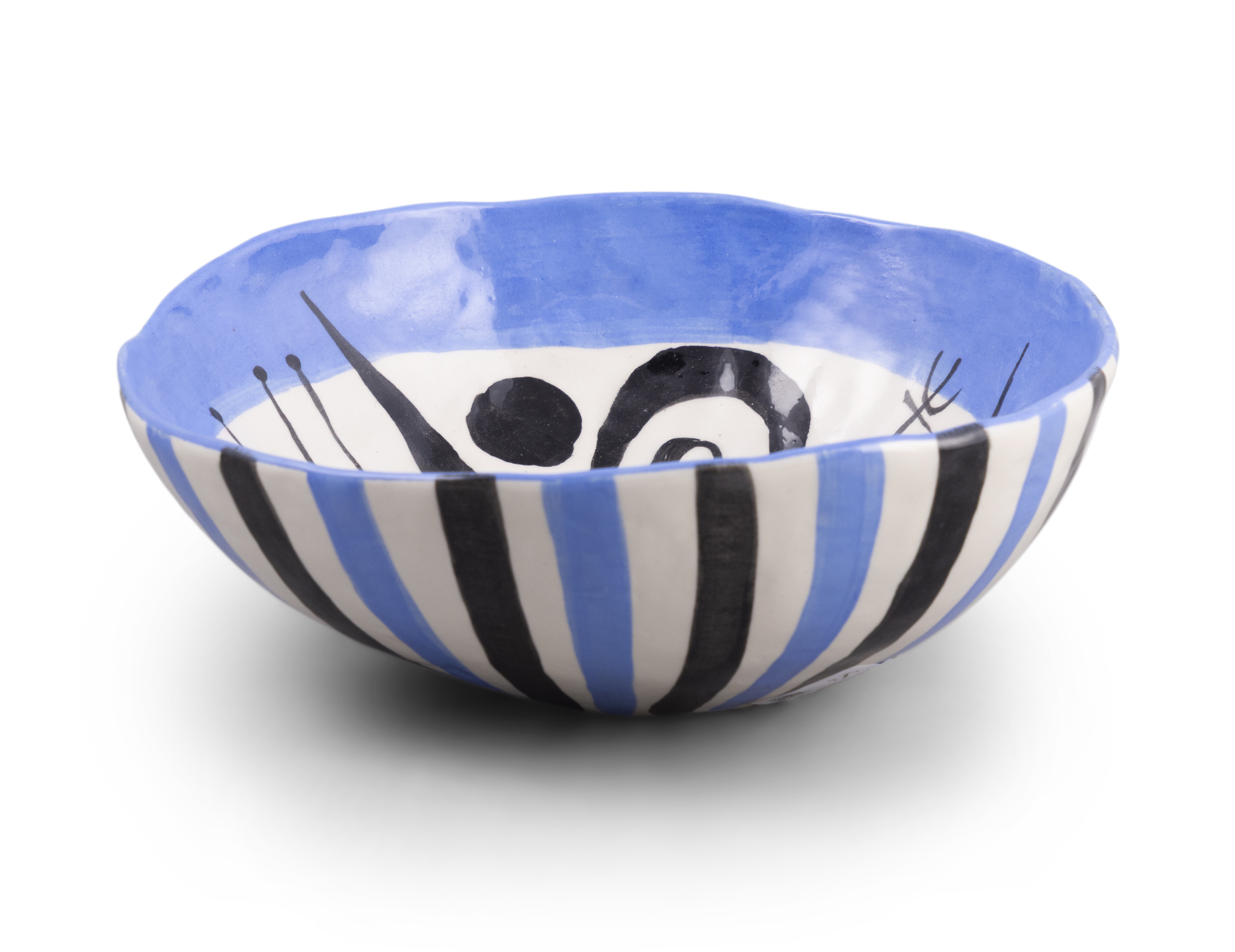
John ffrench was an instrumental figure in the design industry in Ireland and a distinguished pioneer of Irish studio pottery.
)%20(1).jpg)
%20(002).png)
%20(2).jpg)


%20(1200%20x%20768%20px)%20(2).png)
.png)

.png)

"I should declare my hand. I have a weakness for pictures that punch above their physical weight, and for artists who have been quietly underrated for too long. This pair is both. They are intimate enough to live with at close quarters and serious enough to repay any amount of looking. If the market has lately shown signs of catching up with eighteenth-century Irish painting and I think it has, these two small panels feel, to me, like exactly the sort of thing that will look obvious in twenty years’ time."


Adam’s is honoured to present works from the collection of Lord Rossmore in the upcoming Country House Collections auction at Howth Castle on 28th April. It is seldom that an influential Irish family collection that has survived through the generations comes to the open market.

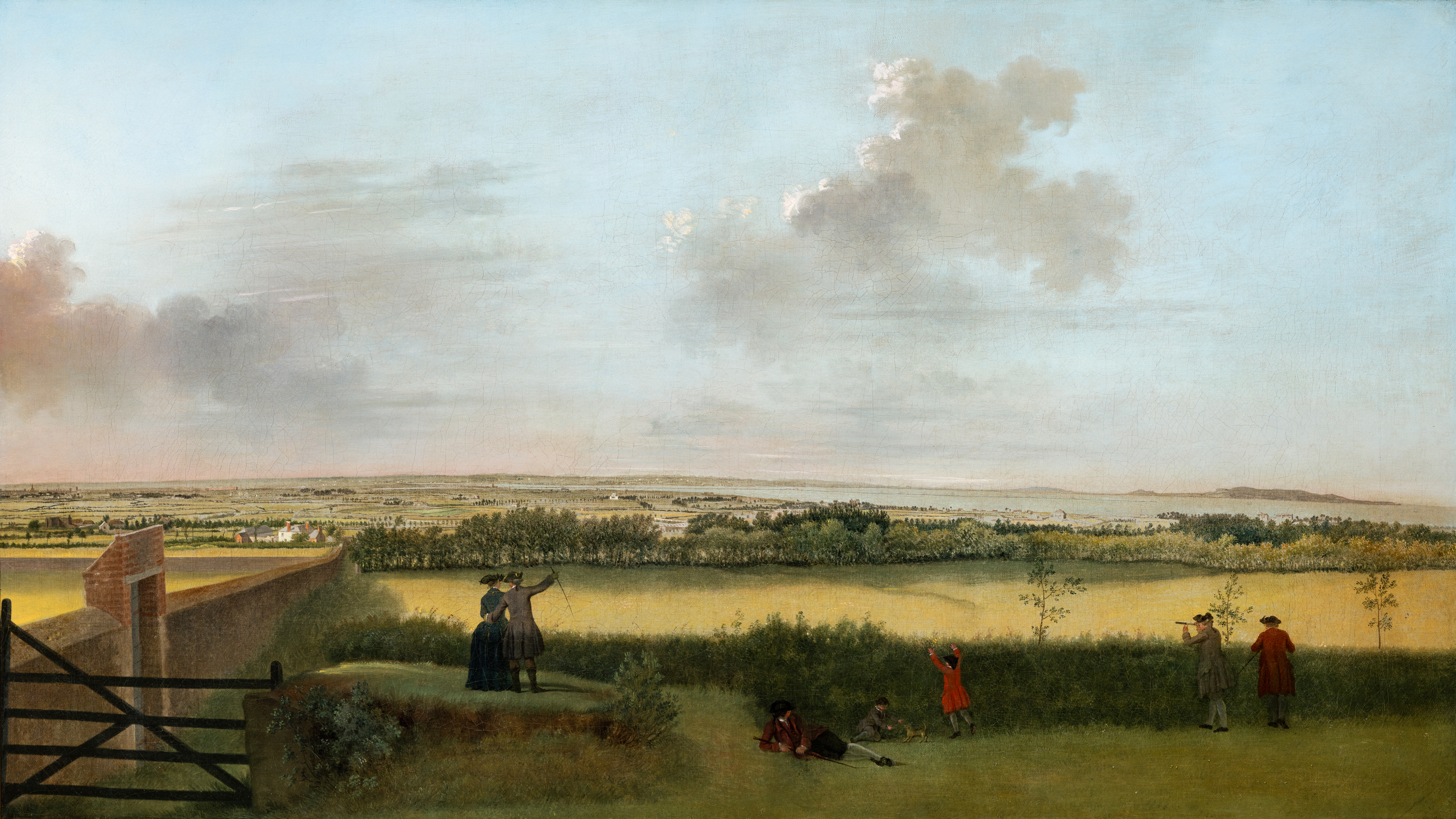
Works Sold at Adam’s Now in the Irish National Collection
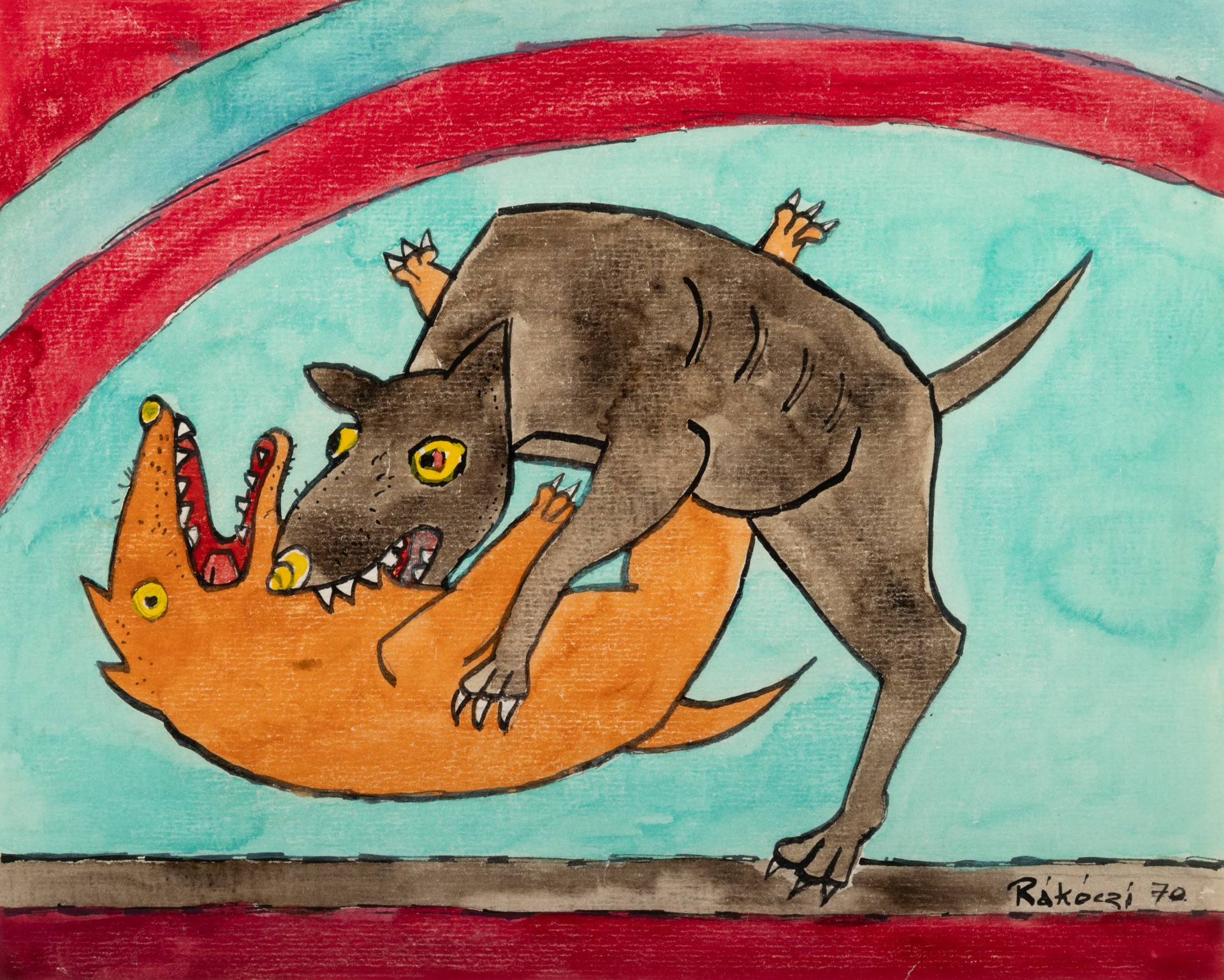
A great opportunity to purchase both established and lesser-known artist’s work at an accessible price point, the Online Picture Auction is the first of many sales to be hosted at Adam’s in 2026. It is perfect for those looking to start a collection and the discerning collector alike.


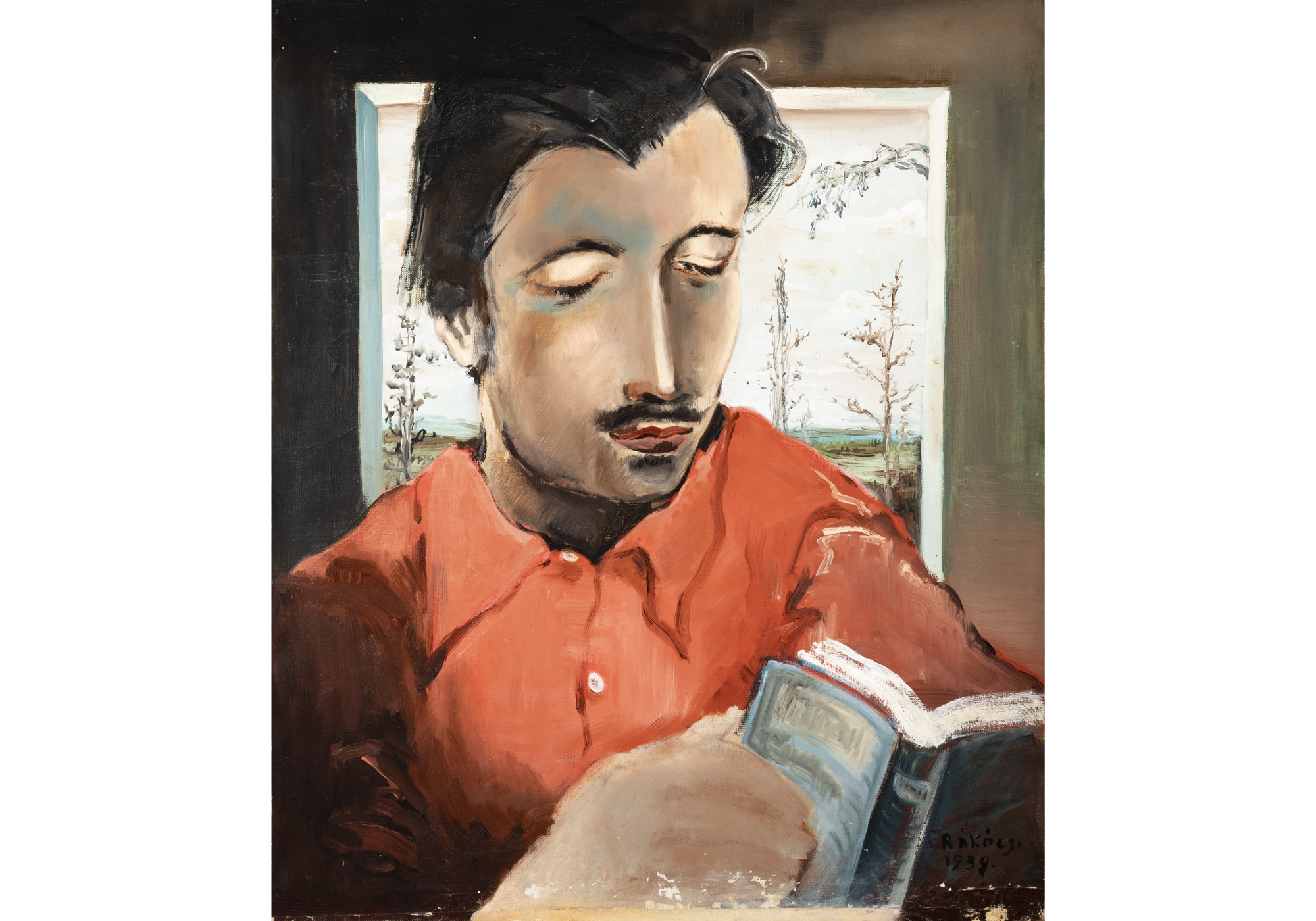
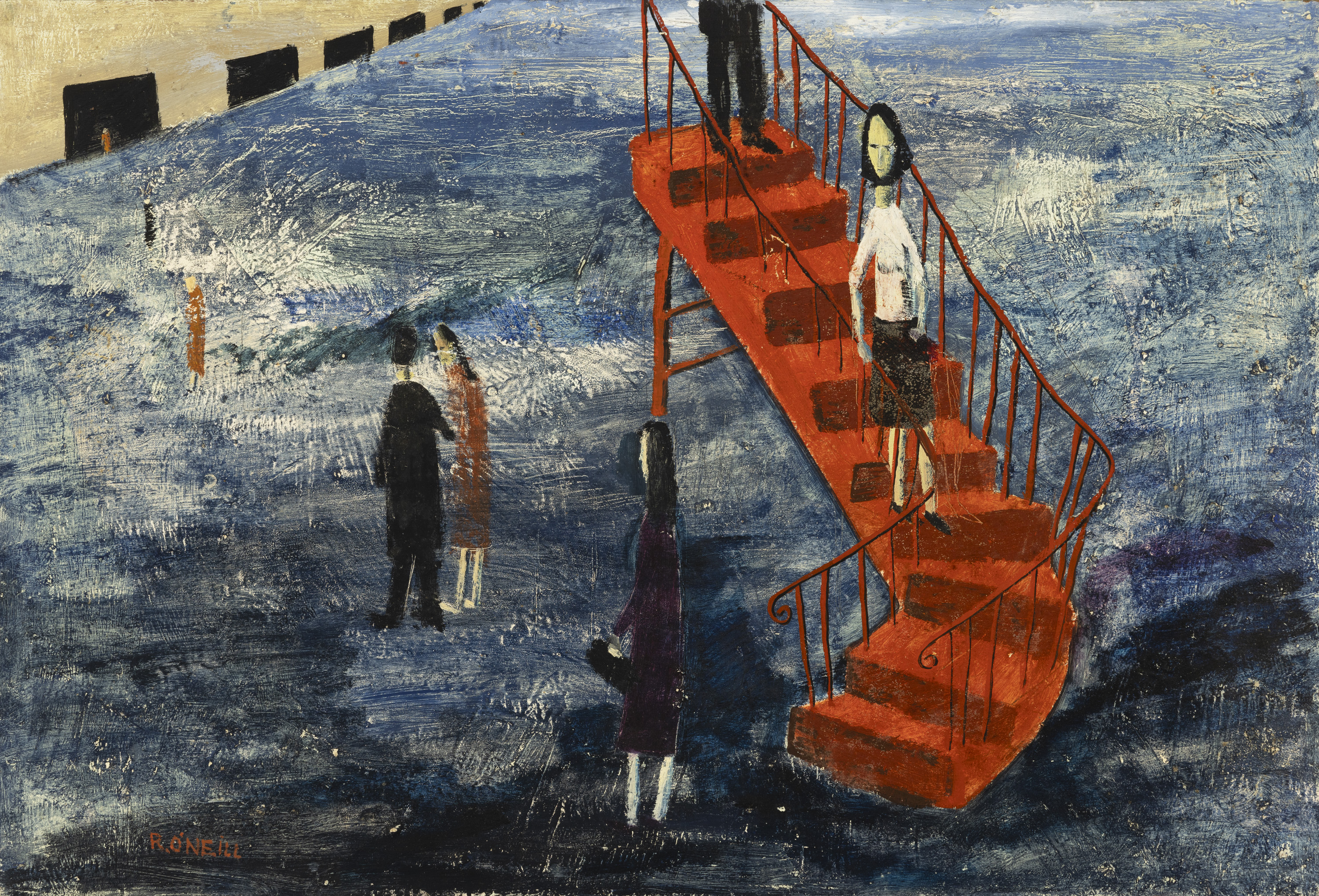
Through this article, let our expert Adam Pearson guiding you to the (re)discovery of the once established Irish painter Richard O’Neill.


Buying at Auction and the Role of Antiques in a Modern Home


Important Irish Art Auction Highlights

Oliver Dowling Collection by Aidan Dunne


2024 is a year in which Adam’s wants to recognise the key role buying antique furniture and furnishings at auction contributes greatly to the sustainable initiative. In 2019 the Environmental Protection Agency reported stark figures that each year in Ireland 1.2 million reusable bulky items, primarily furniture goes into landfill. Similar to the problem of ‘fast fashion’, the constant production and consumption of new items is leading to rapidly growing waste problem. We want to acknowledge those who are already buying second hand or antique furniture at auction and to encourage new buyers by highlighting the benefits of acquiring affordable, well-made quality items that are built to last.


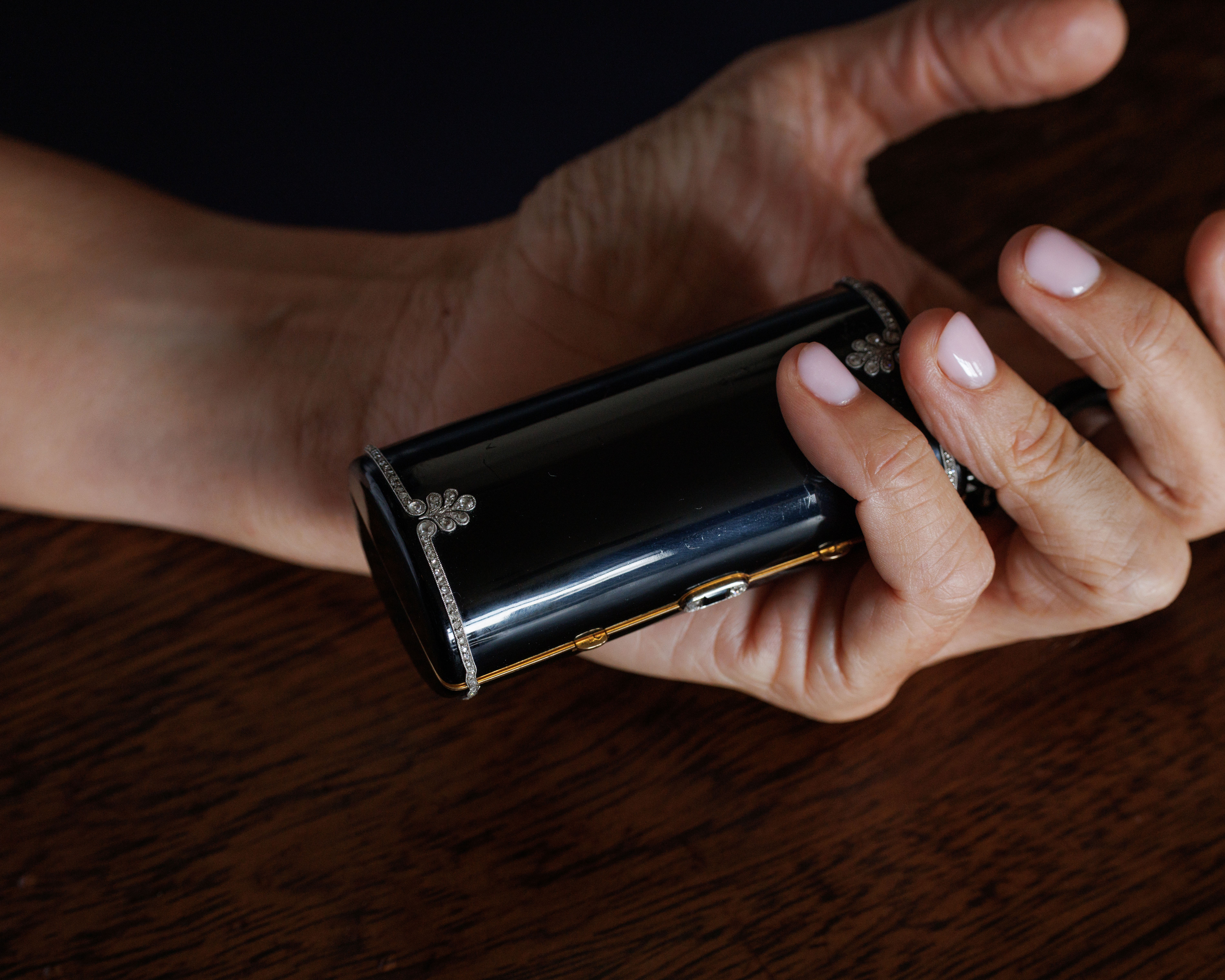
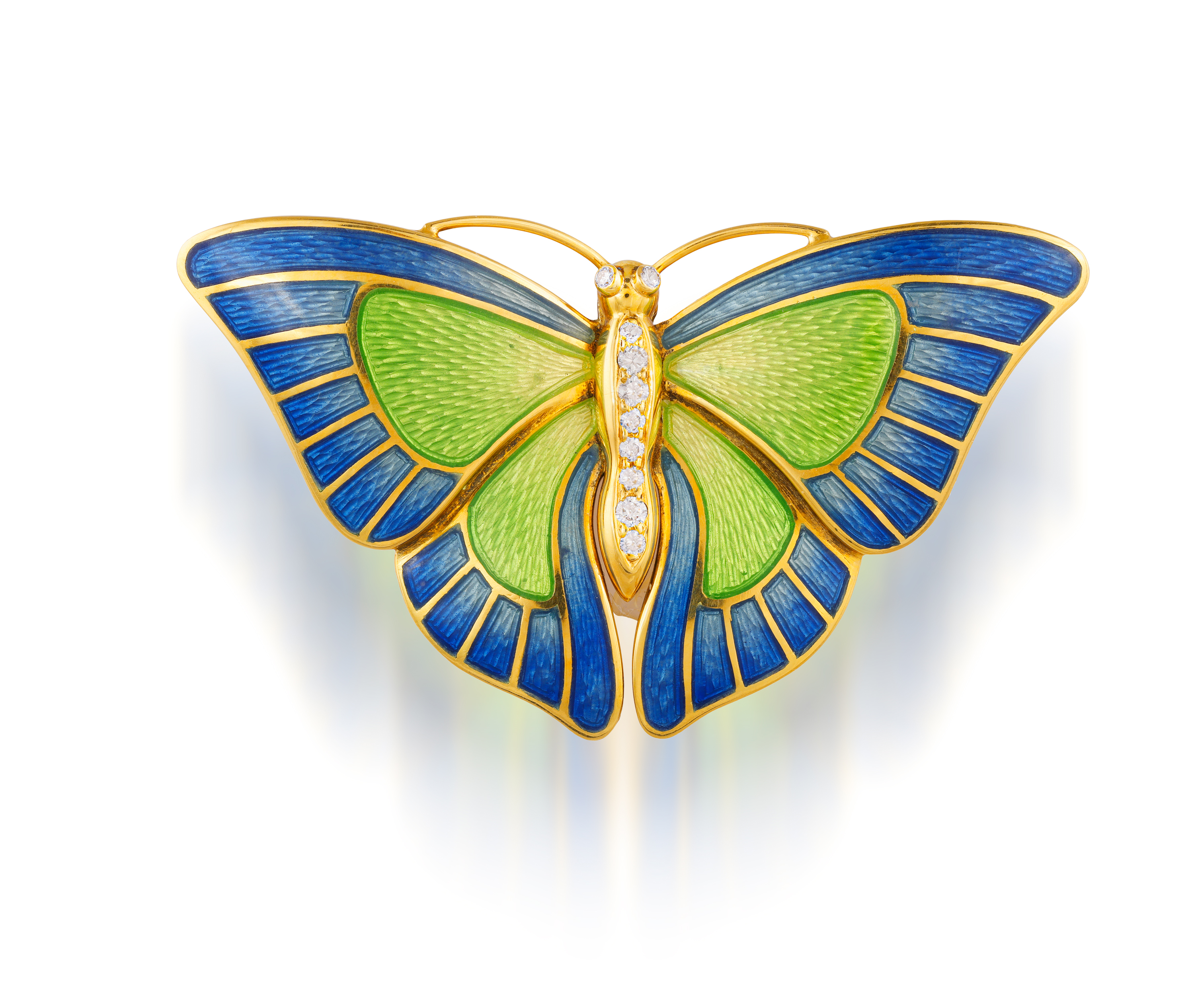
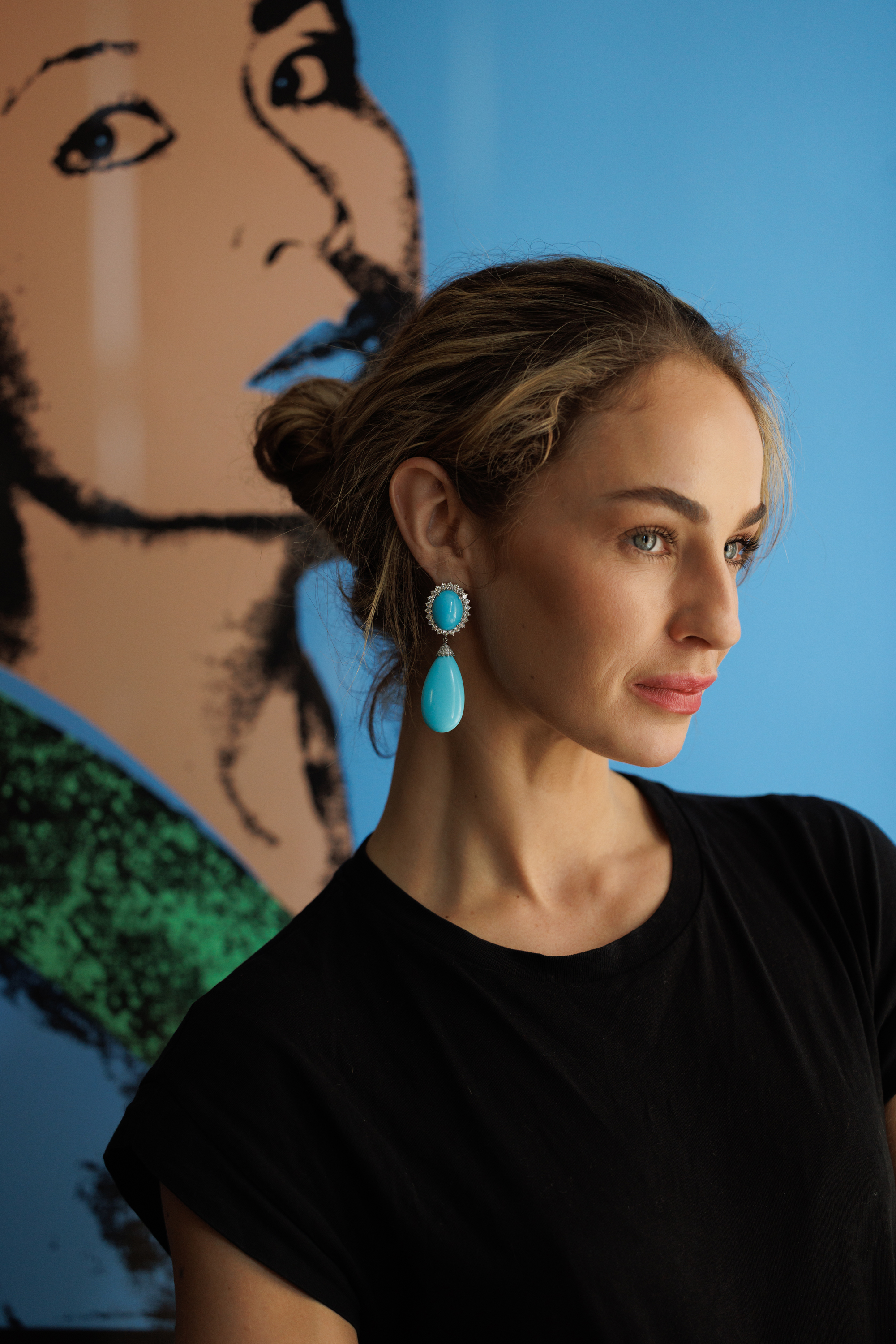
Irish author, recipe creator and lifestyle influencer, Indy Parsons, selects her favourite pieces from our upcoming Fine Jewellery & Watches auction


James Adam & Sons Ltd, Fine Art Auctioneers and Valuers, 26 St. Stephen’s Green, Dublin 2,
D02 X665, Ireland


