
menu
Departments
.svg)

A Collector's Guide to Understanding Chinese Porcelain
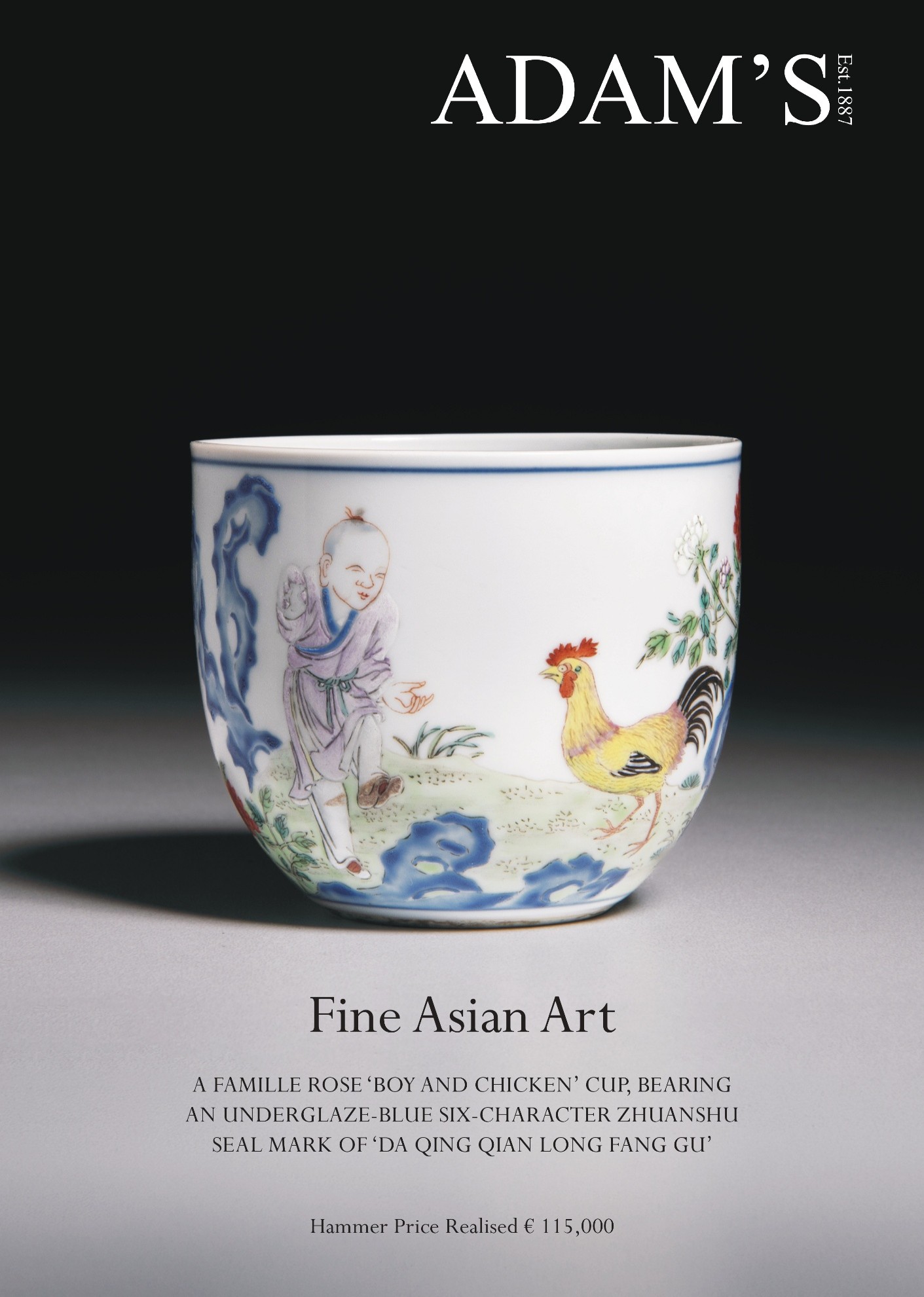
At only 8cm across, this Qianlong-period imperial chicken cup became the top lot of our recent auction, achieving €115,000 against strong international competition.
Why did such a small object attract so much attention?
Three factors stood out:
Read more about the story behind this remarkable cup.
1. Imperial History
This was no ordinary piece of porcelain. Imperial workshop records reveal that in 1776, a pair of celebrated Chenghua-period chicken cups was presented to the Qianlong Emperor. Fascinated by these revered Ming-dynasty prototypes, the emperor ordered official copies to be produced from specially prepared drawings and models.
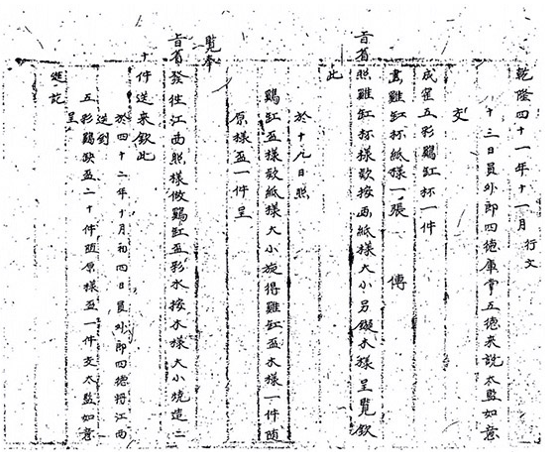
Production was entrusted to the imperial kilns at Jingdezhen, the principal centre of imperial porcelain production during the Qing dynasty. Once completed, the cups entered palace collections and were recorded as imperial curiosities and objects of appreciation rather than everyday drinking vessels.
The present cup was therefore created not for the commercial market, but within the imperial system itself, reflecting the artistic ambitions and collecting interests of the Qing court. As both an homage to one of China's most famous ceramic masterpieces and a product of the Qianlong emperor's passion for antiquity, it occupies a distinguished place within the history of imperial porcelain.
2. Form — Small Is Supreme
The market has long shown a strong preference for small, finely crafted functional wares. This cup's elegant proportions and refined workmanship demonstrate the remarkable degree of precision demanded ofthe potter, leaving little margin for error within a vessel measuring scarcely eight centimetres across. Compact in scale yet sophisticated in execution, it embodies the technical and aesthetic achievements of its maker.
Equally significant is the growing appreciation among collectors for objects that invite direct engagement rather than mere display. While monumental ceramics often command attention through their size and presence, intimate vessels such as this derive their appeal from a more personal experience. A cup like this was conceived not only to beadmired, but also to be held, used, and appreciated in the hand. Its tactilequalities, balance, and functionality are inseparable from its artistic value.
This attitude is perhaps best illustrated by one of the most celebrated moments in the modern ceramics market. In 2014, the Shanghai collector Liu Yiqian acquired a Ming-dynasty Chenghua “Chicken Cup” at auction in Hong Kong for a record-breaking price exceeding €26 million. Shortly after taking possession of the piece, he famously drank Pu'er tea from it. The gesture attracted worldwide attention, yet it also reflected a longstanding belief shared by many collectors: that the highest appreciation of an exceptional vessel lies not solely in its rarity or value, but in experiencing it as its makers originally intended.
Its appeal rests not only in its appearance but also in the intimate relationship it establishes between object and owner, a quality that continues to resonate strongly with collectors today.
3. Design, Symbolism and LiteraryCulture
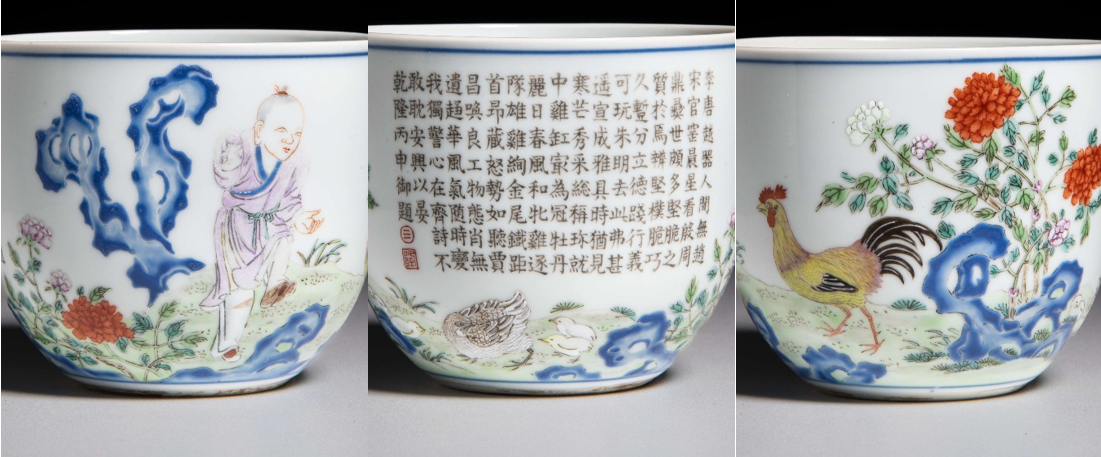
The decoration is far more than a charming scene of chickens in a garden.
One side depicts a young attendant beside a proud rooster, traditionally identified as Jia Chang, the legendary Tang-dynasty cock trainer whose story became closely associated with court culture and later artistic representations. His tale remained popular for centuries, appearing in literature, painting, and the decorative arts, where it came to symbolize skill, discipline, and imperial patronage.
Te rooster-and-chicks motif itself derives from the celebrated Chenghua chicken cup of the Ming dynasty, one of the most admired porcelains in Chinese history. By the Qianlong period, the design had already achieved iconic status among collectors and connoisseurs, serving as asymbol of refined taste and imperial appreciation of the past.
What distinguishes the present cup from many later adaptations of the famous chicken-cup design, however, is the reverse side. Here appears the Qianlong Emperor's own Ode to the Chenghua Chicken Cup, carefully inscribed in black enamel and accompanied by two imperial seals. The inclusion of an imperial poem transforms the vessel from adecorative tribute into a deeply intellectual object, one that directly reflects the emperor's engagement with the artistic legacy of earlier dynasties.
For Chinese collectors, this feature carries particular significance. In traditional Chinese aesthetics, the highest expression of cultivated taste was often found in the union of poetry, calligraphy, painting, and seal carving. Rather than existing as separate disciplines, these artistic accomplishments were understood as complementary forms of cultural expression.
In this sense, the present cup may be appreciated as a miniature synthesis of these ideals. It embodies not only imperial craftsmanship but also the literary and scholarly values that occupied a central place in Chinese intellectual life. More than a work of porcelain, it is a small but eloquent expression of the literati tradition.
4. Craftsmanship at the Highest Level
Qianlong-period porcelain is renowned for its extraordinary technical refinement, and this cup provides a particularly fine example.
Rather than reproducing the Ming original exactly, imperial potters reinterpreted it through the sophisticated famille rose palette that reached full maturity during the eighteenth century. The result is not a mere copy but a creative reimagining of a celebrated prototype.
The enamels display remarkable delicacy and control. The rooster's plumage, flowering peonies, and rocky landscape are rendered with subtle colour gradations and exceptional attention to detail. Every element contributes to a composition that feels both lively and remarkably balanced.
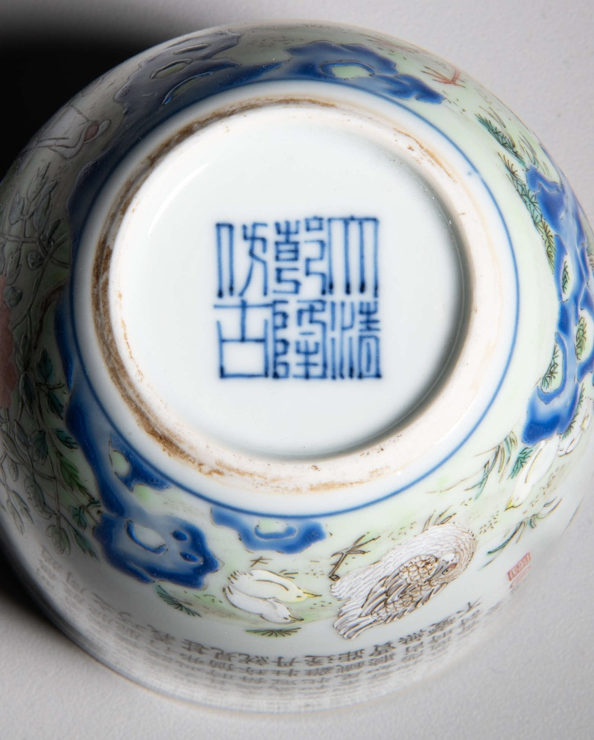
The base bears a six-character underglaze-blue mark reading: Da Qing Qianlong Fang Gu (“Made in the Great Qing, Qianlong Reign, in Emulation of Antiquity”). The phrase perfectly encapsulates the artistic philosophy of the Qianlong court: honouring antiquity while reinterpreting it through the artistic language of the Qing dynasty.
5. Outstanding Condition
Condition remains a critical consideration for collectors of Chinese ceramics.
The present cup survives in remarkably well-preserved condition, retaining its original enamels, crisp decoration, and strong overall appearance. The colours remain vibrant, while the painted details preserve the delicacy intended by the eighteenth-century artisans who created them.
For collectors, quality frequently outweighs scale. A small masterpiece preserved in exceptional condition can attract considerably greater attention than a larger object lacking comparable refinement or preservation.
6. Fresh Provenance
The cup came from a long-held European private collection and was fresh to the Asian market.
Collectors place considerable importance on objects that have remained outside the market for extended periods. Such works often attract particular attention because they have not circulated widely through auctions and dealerships and therefore retain a sense of rarity and discovery.
Combined with its imperial association, strong condition, and broad international appeal, this fresh provenance contributed significantly to the enthusiastic competition among bidders.
Why Collectors Wanted It
Ultimately, collectors were not simply acquiring a porcelain cup.
They were acquiring an object that encapsulates many of the qualities most prized in Chinese art: imperial association, celebrated historical models, literary sophistication, technical excellence, and remarkable preservation.
More than two centuries after it was made, the present cup continues to demonstrate why the finest imperial porcelains occupy such a distinguished place in the history of Chinese art. Small in scale, certainly, yet extraordinary in its ability to unite history, craftsmanship, poetry, calligraphy, and culture within the space of a single hand-held object.
That is why this tiny imperial cup became ourtop lot.
Have AsianArt to Sell? Contact Our Specialists for a Valuation.




.jpg)

.png)
.png)
.jpg)

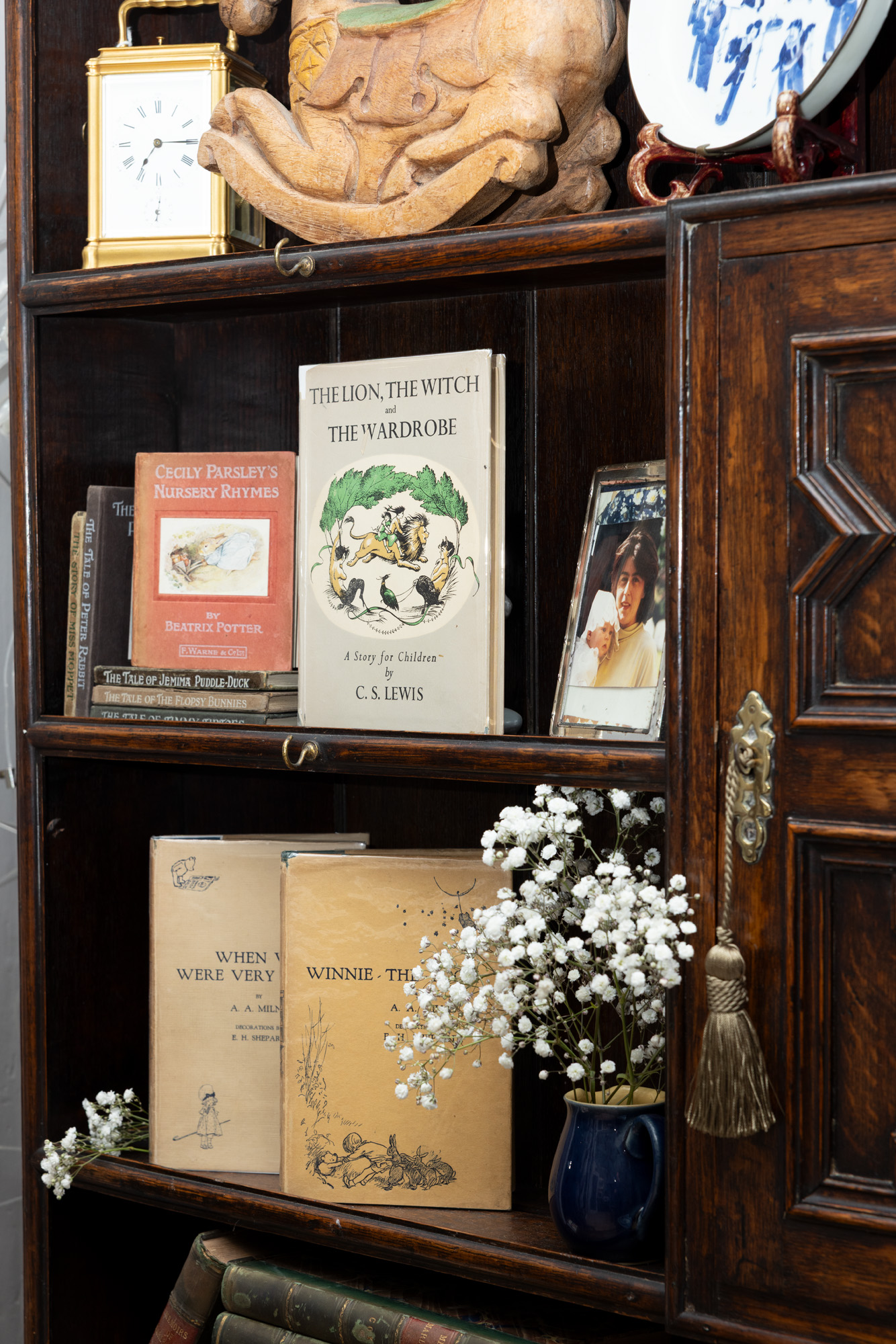

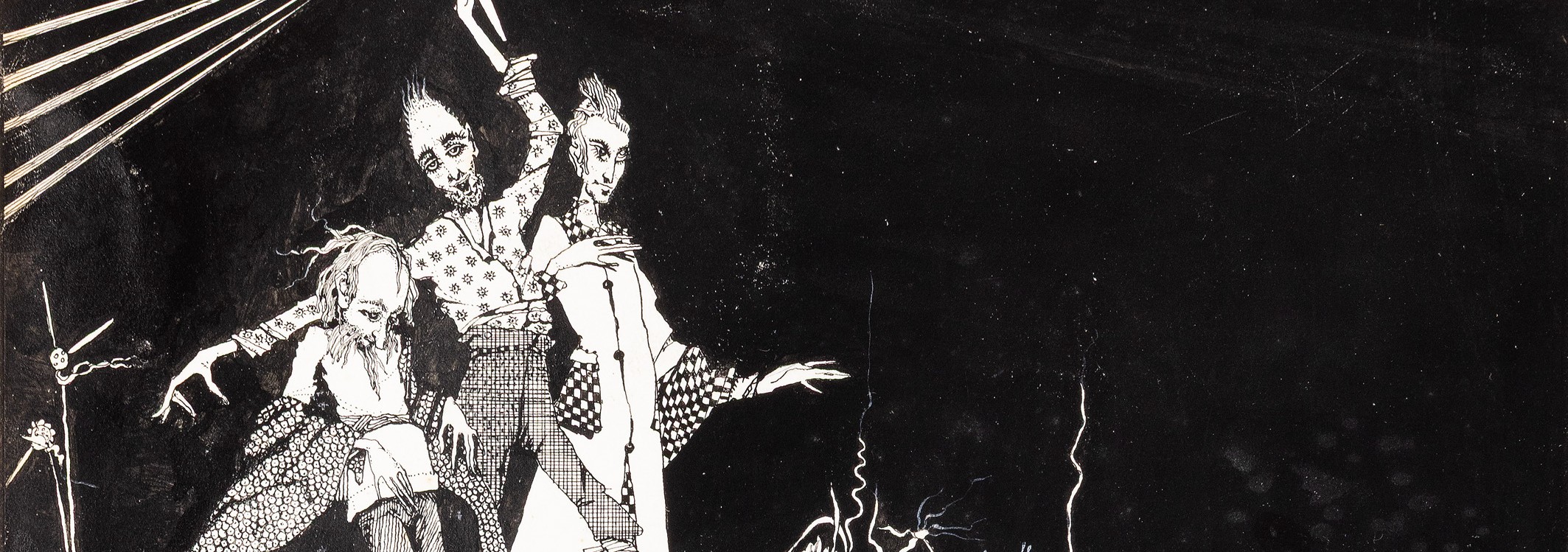

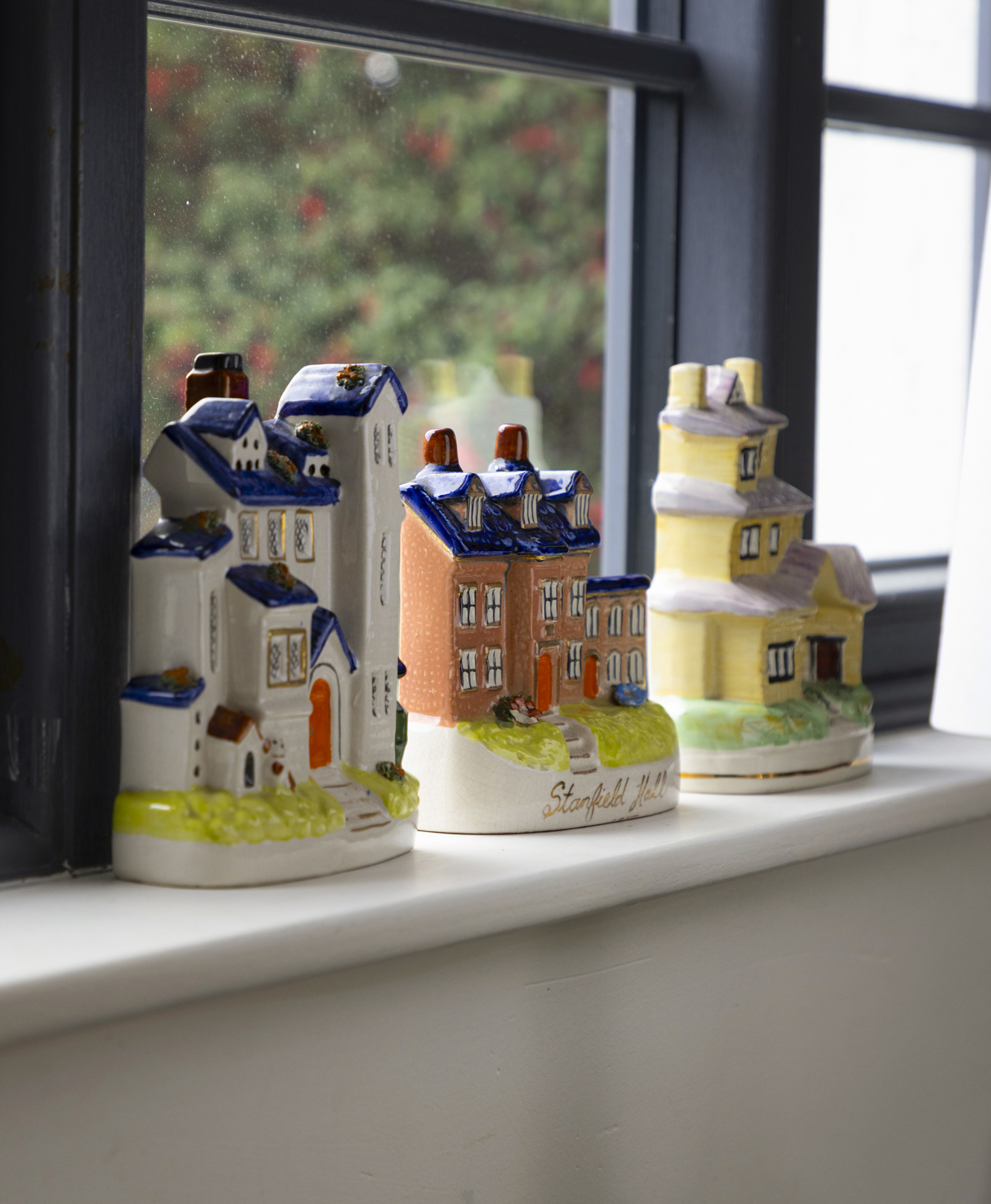
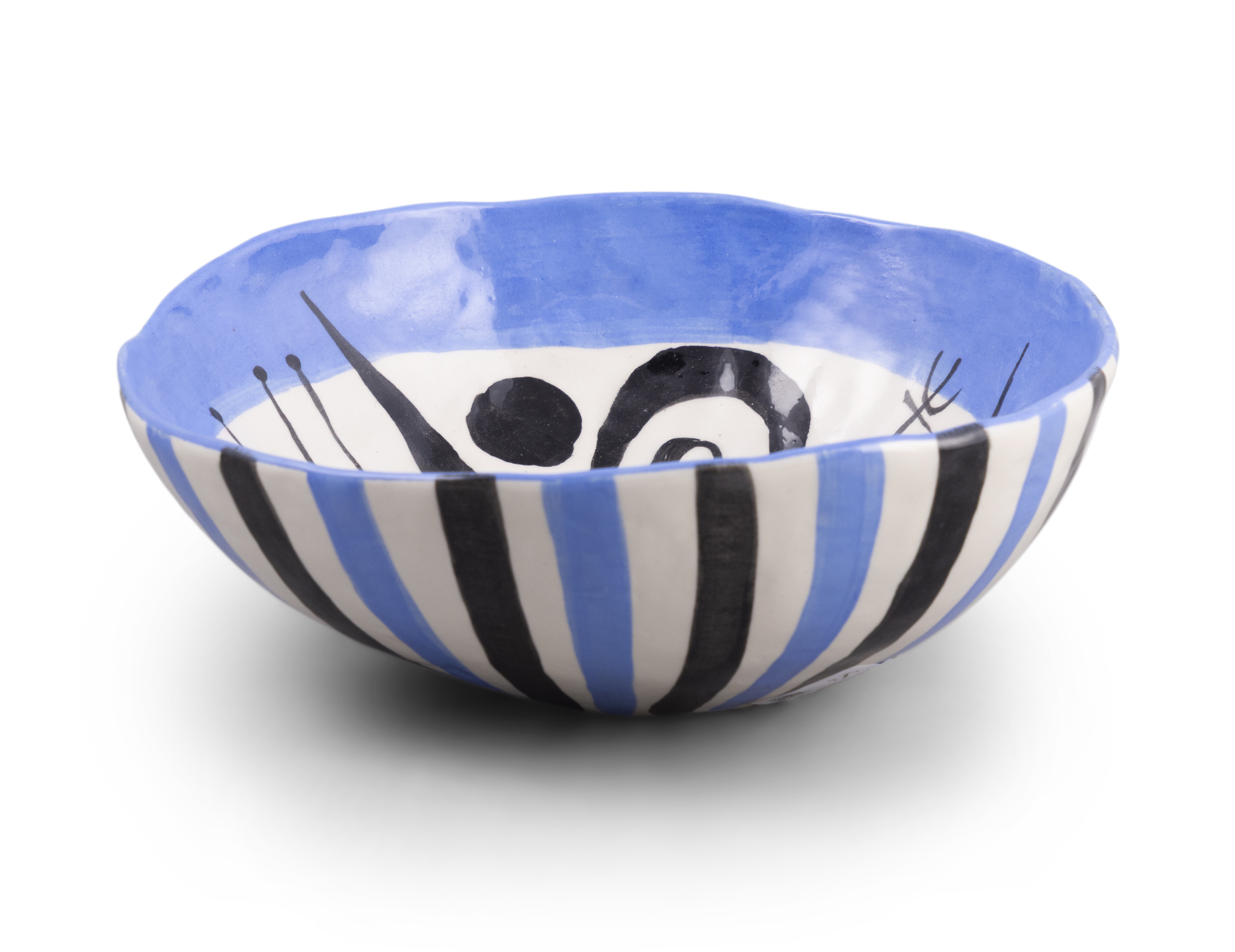
John ffrench was an instrumental figure in the design industry in Ireland and a distinguished pioneer of Irish studio pottery.

)%20(1).jpg)

%20(002).png)

%20(2).jpg)




%20(1200%20x%20768%20px)%20(2).png)
.png)

.png)


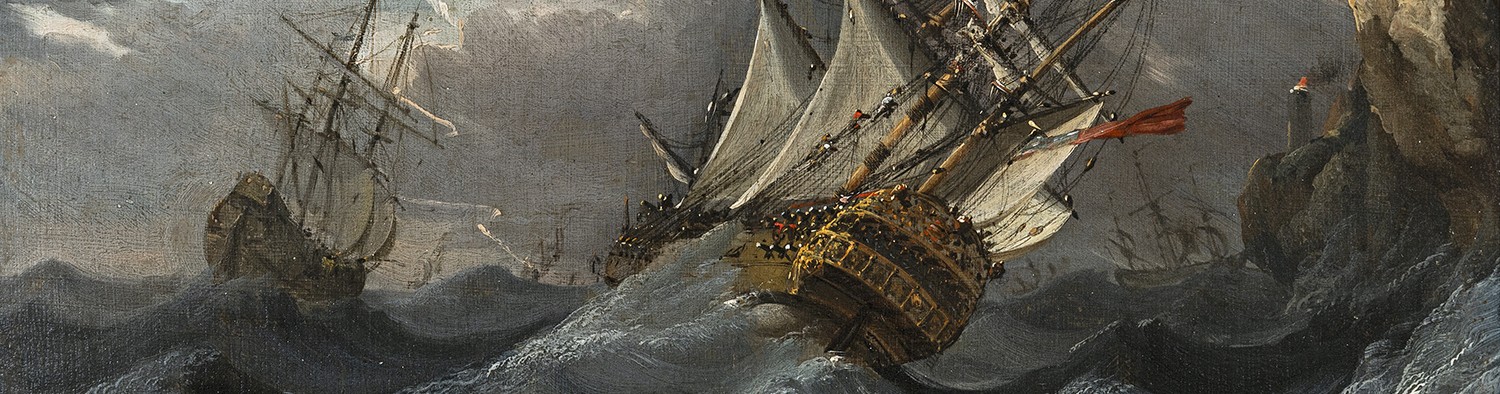
"I should declare my hand. I have a weakness for pictures that punch above their physical weight, and for artists who have been quietly underrated for too long. This pair is both. They are intimate enough to live with at close quarters and serious enough to repay any amount of looking. If the market has lately shown signs of catching up with eighteenth-century Irish painting and I think it has, these two small panels feel, to me, like exactly the sort of thing that will look obvious in twenty years’ time."

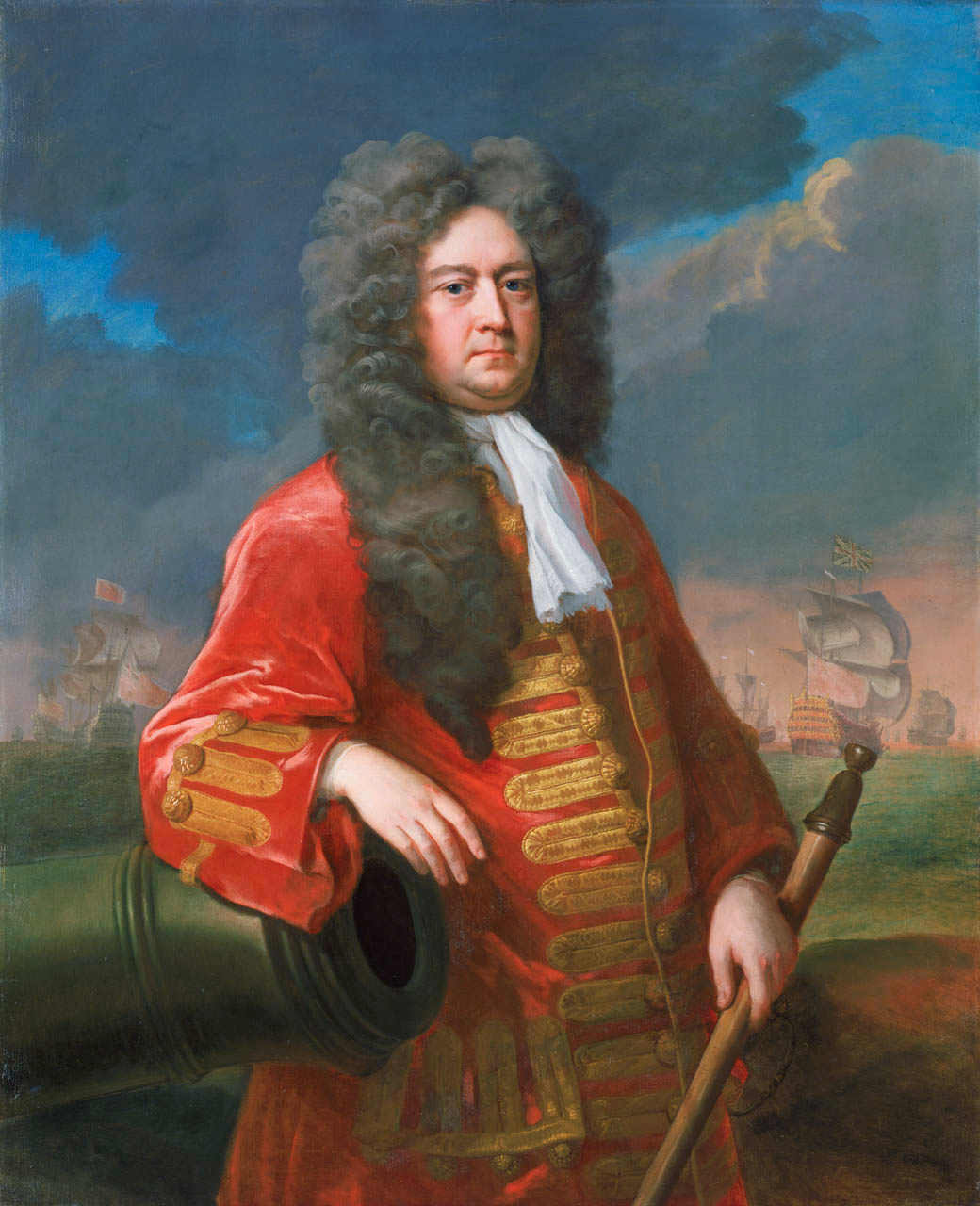




Adam’s is honoured to present works from the collection of Lord Rossmore in the upcoming Country House Collections auction at Howth Castle on 28th April. It is seldom that an influential Irish family collection that has survived through the generations comes to the open market.


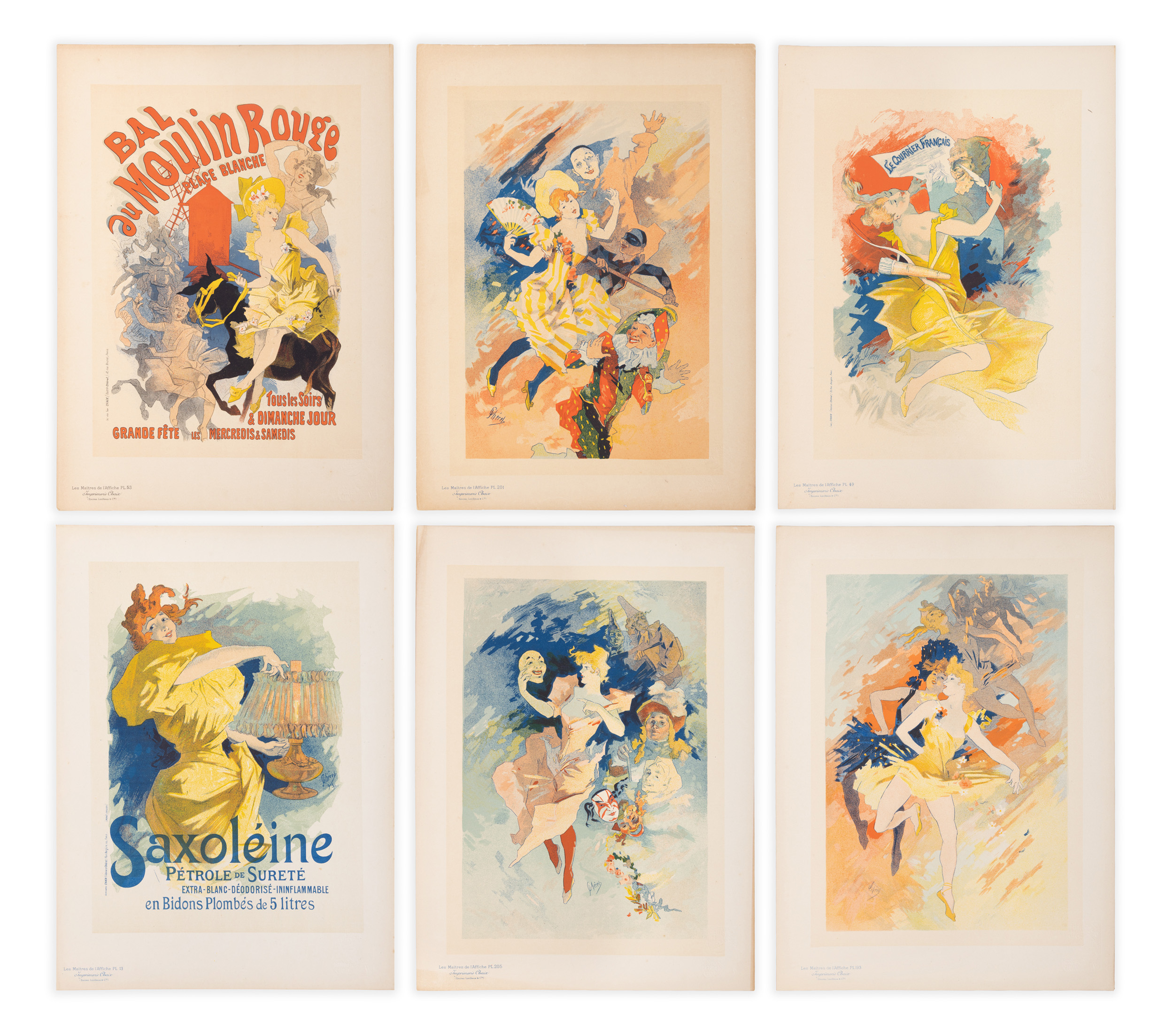

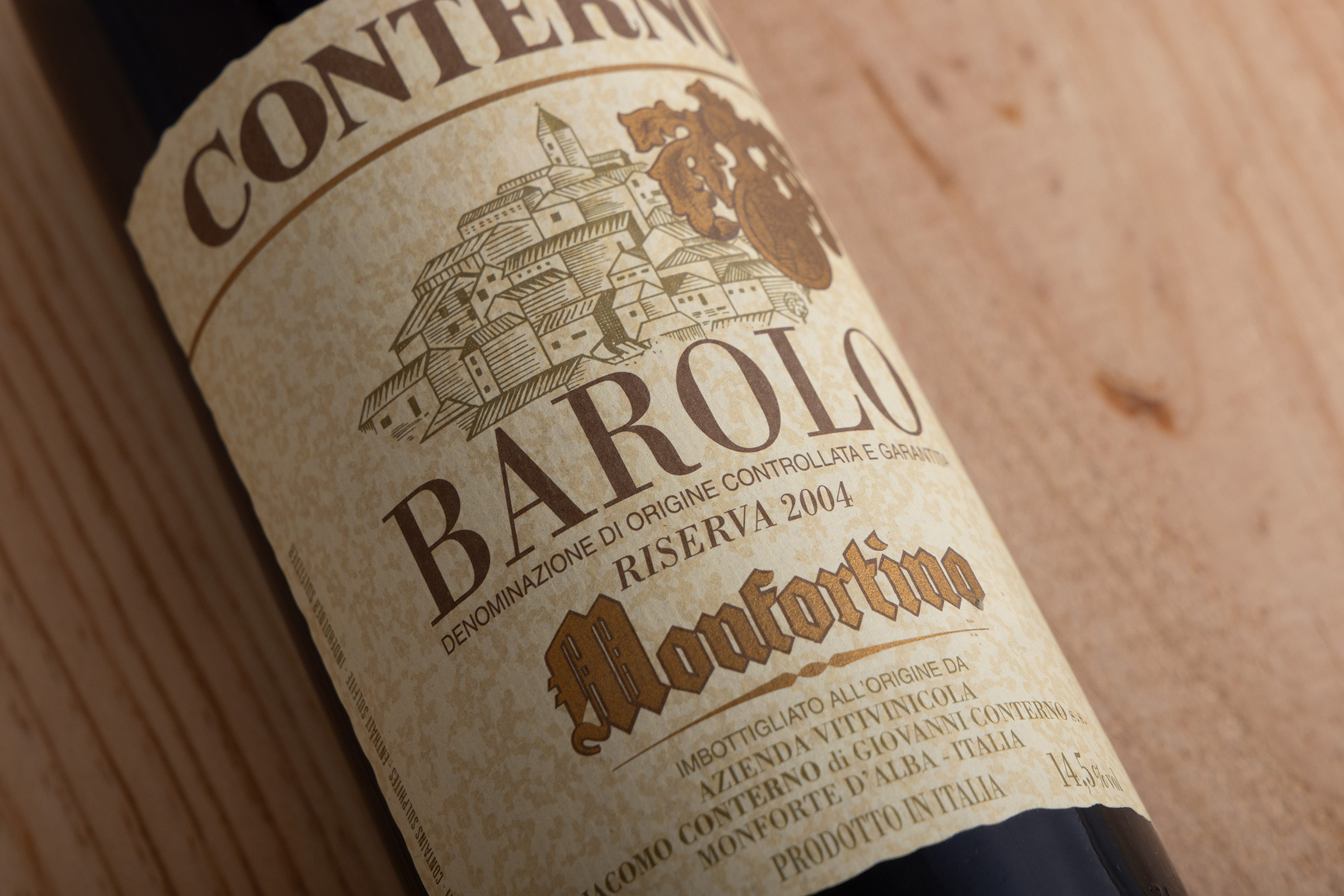
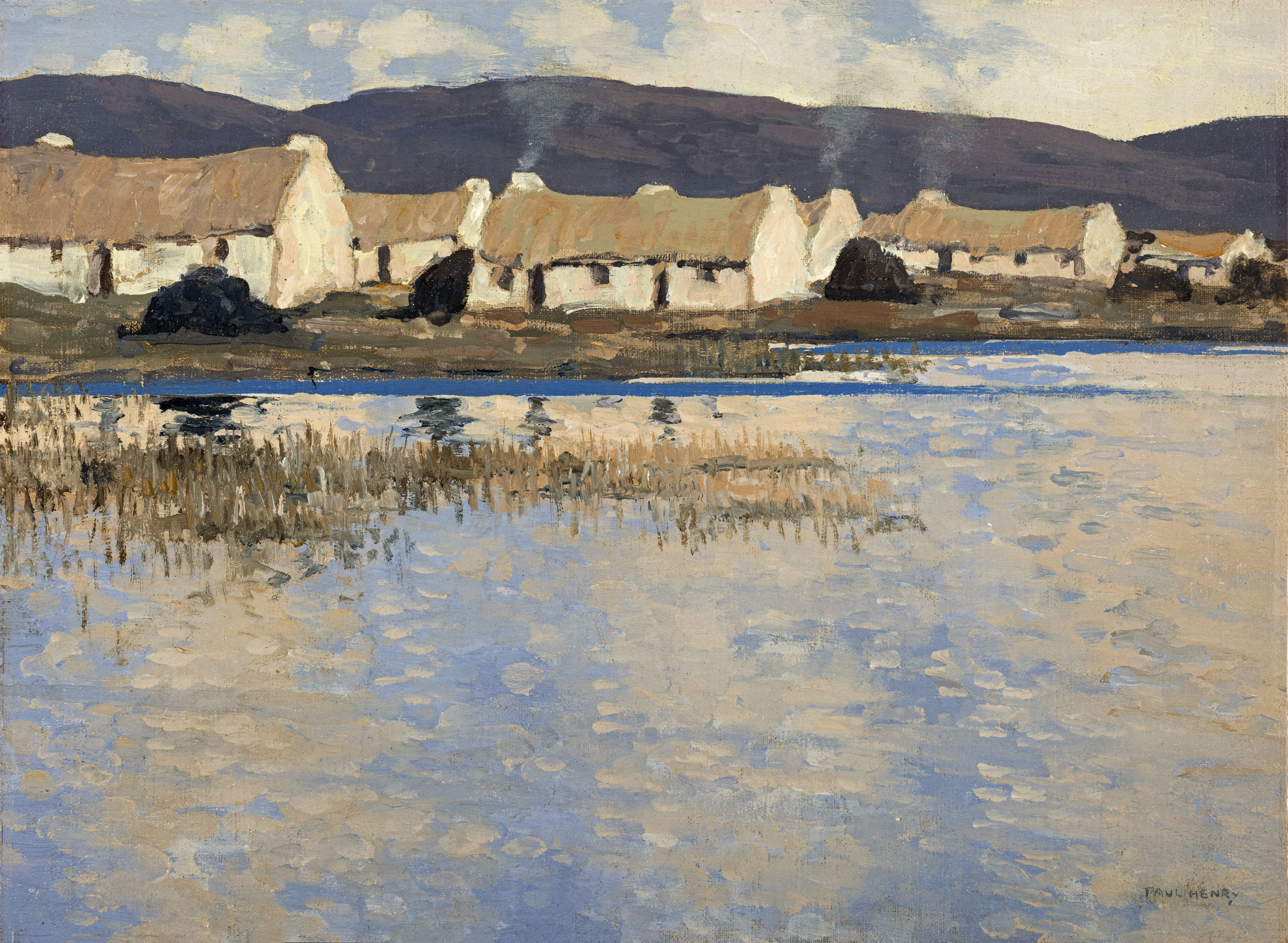
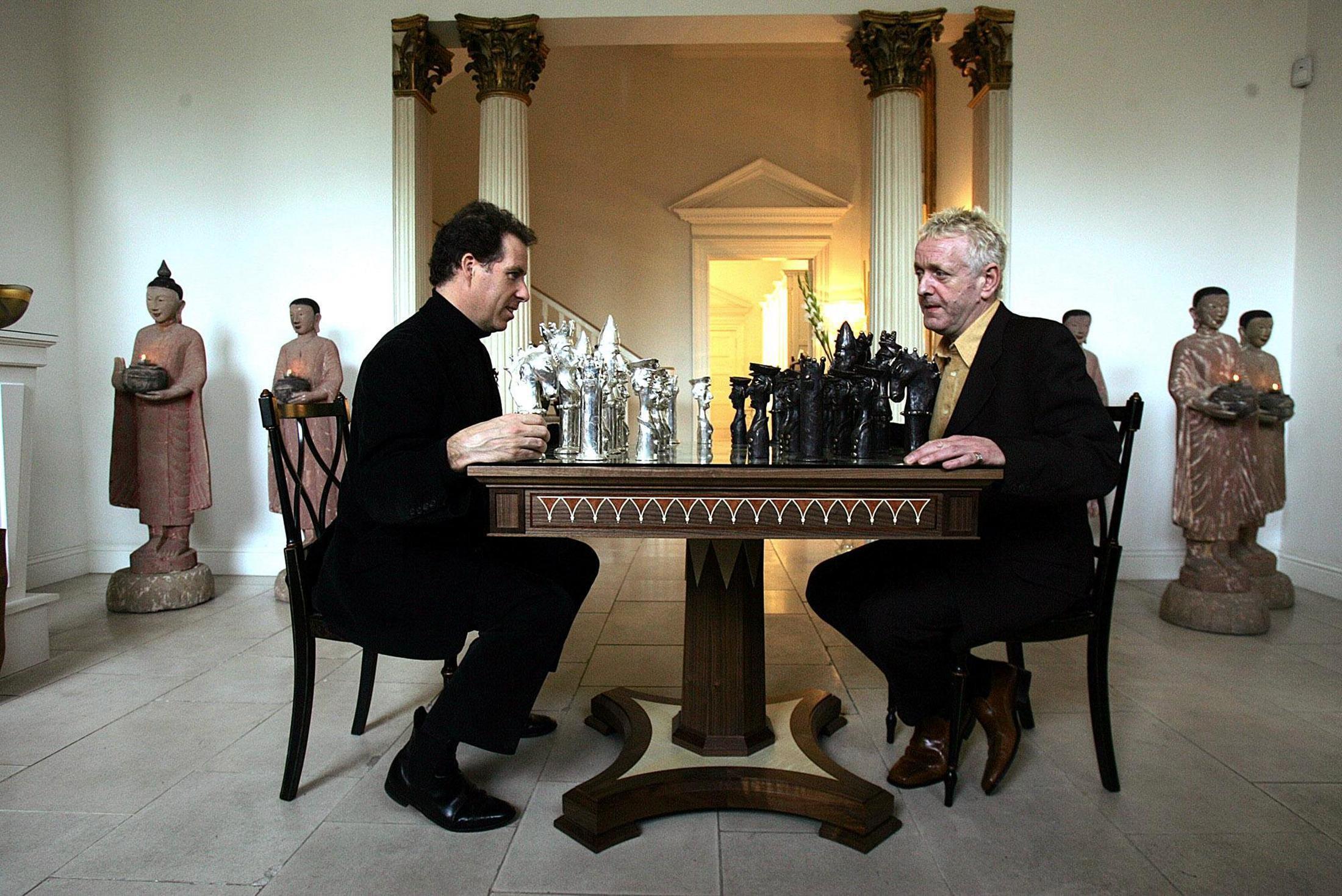
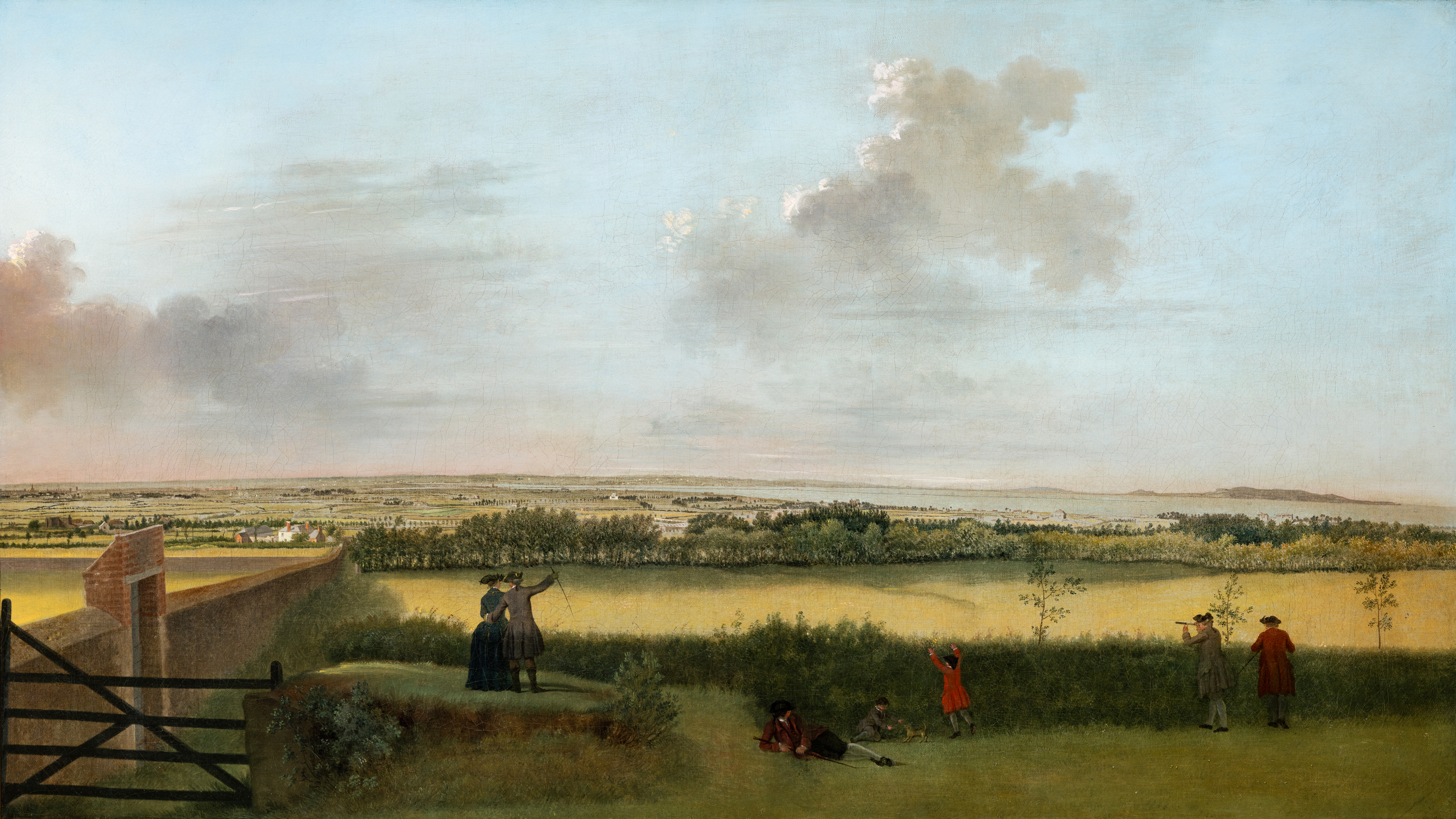
Works Sold at Adam’s Now in the Irish National Collection

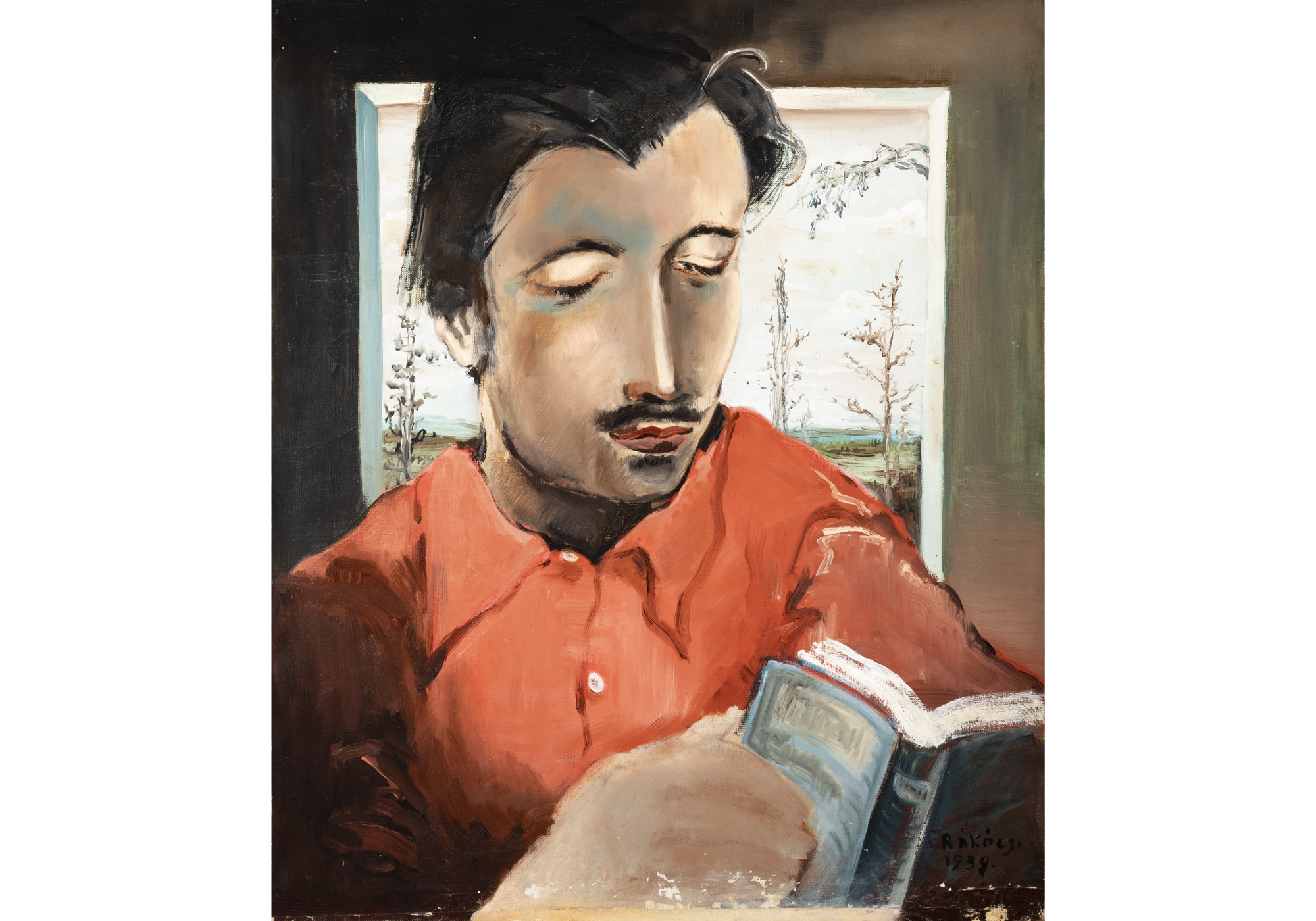
A great opportunity to purchase both established and lesser-known artist’s work at an accessible price point, the Online Picture Auction is the first of many sales to be hosted at Adam’s in 2026. It is perfect for those looking to start a collection and the discerning collector alike.


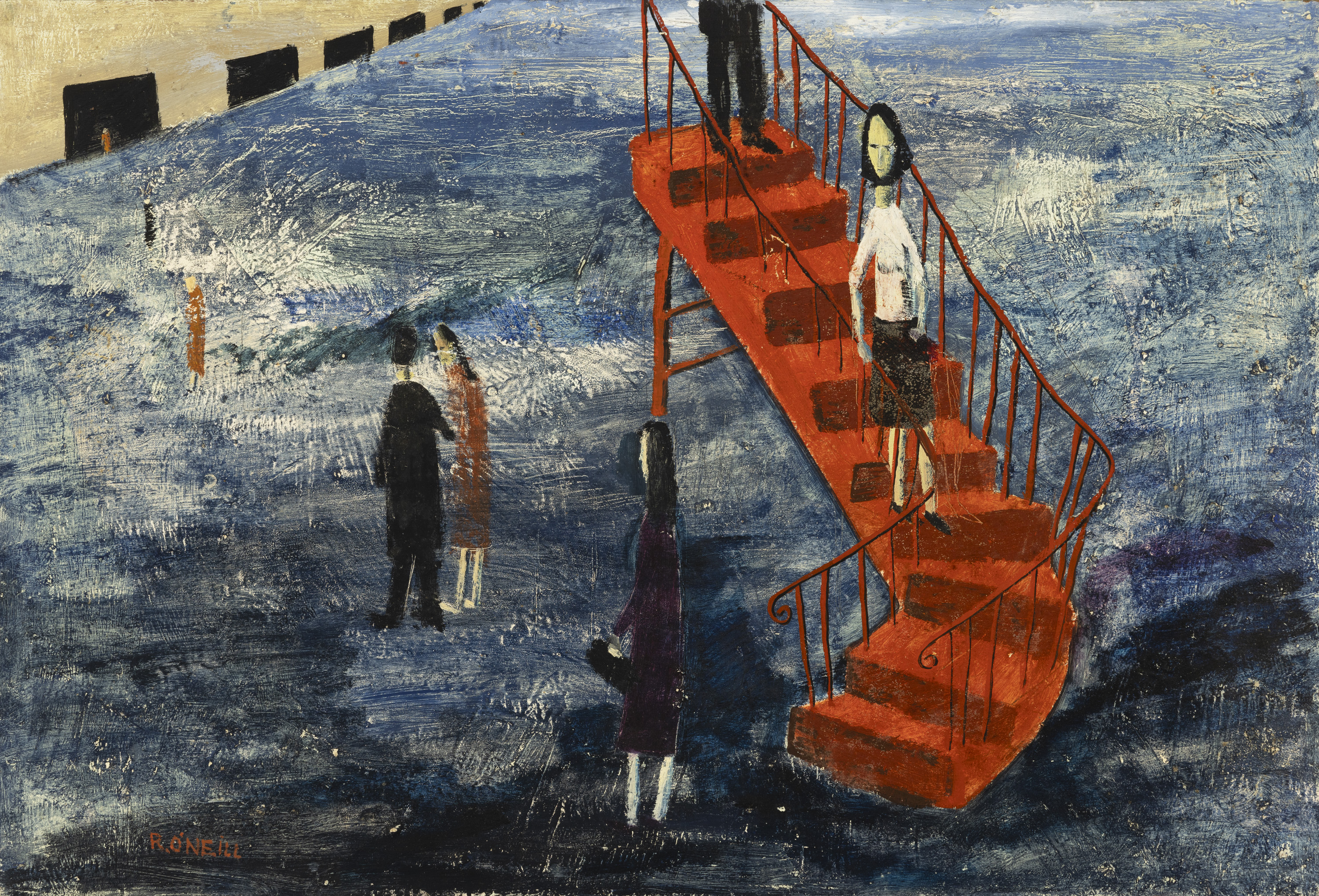
Through this article, let our expert Adam Pearson guiding you to the (re)discovery of the once established Irish painter Richard O’Neill.


Buying at Auction and the Role of Antiques in a Modern Home


Important Irish Art Auction Highlights

Oliver Dowling Collection by Aidan Dunne


James Adam & Sons Ltd, Fine Art Auctioneers and Valuers, 26 St. Stephen’s Green, Dublin 2,
D02 X665, Ireland


